


Beyond the espresso martini: How can coffee shops serve cocktails?

Key takeaways
- Late afternoon and evening are the best times for coffee shops to serve cocktails.
- Pre-batching and smart equipment make cocktail service operationally viable.
- Higher margins and longer visits make cocktails financially worthwhile.
- Gen Z’s sobriety makes a strong mocktail offering equally important.
The espresso martini is perhaps the quintessential coffee cocktail. It has undergone a reinvention in recent years, including a Parmesan cheese-infused version – signalling a new era for the iconic drink.
But for coffee shop owners considering a cocktail menu, the espresso martini is only the beginning. A growing number of cafés are discovering that cocktails, served thoughtfully and efficiently, can open new revenue streams, attract new customers, and transform the atmosphere of their space.
Although it’s an exciting opportunity to flex creative muscle, it still requires a well-executed strategy, the right equipment, and proper training.
You may also like our article on which RTD coffee ingredients roasters should look out for.

When should coffee shops serve cocktails?
Timing is one of the most important decisions when adding cocktails to a menu. Late afternoon and early evening tend to offer the clearest opportunity, as the traditional coffee crowd thins and a post-work clientele begins to arrive.
Coffee shops that already trade until 7 or 8 pm are well placed. A cocktail offering gives customers a reason to stay longer or return for a second visit. For those that close earlier, extending hours to accommodate a drinks programme is a significant operational step and one that requires careful financial planning before any commitment is made.
The more pressing question for many owners is whether their existing customers would welcome cocktails at all, or whether a drinks programme might attract a new audience without unsettling regulars. A specialty coffee shop with a loyal morning crowd may find that cocktails serve an evening clientele with little overlap with its core base.
“When cocktails are an easy, low labour-intensive addition to the main menu, it makes sense,” says Dany Meeuwissen, owner of The God Shot and a Hardtank distributor for the Benelux region. “You shouldn’t serve them if it diverts too much from your main concept, since it could confuse customers, or when they are too labour-intensive.”
The format of the coffee shop also plays a role. Specialty cafés with counter seating, a culture of experimentation, and a food offering tend to be better positioned than stripped-back, takeaway-focused operations. The common factor is a space that encourages guests to slow down.
Rob Biesmans, a hospitality consultant and founder of Big Daddy’s Falernum, advises keeping the menu tight. “The key is not to make the cocktail menu too large,” he says. Most successful programmes launch with three to five drinks, enough to signal intention without putting pressure on the team or the brand.
The operational challenges of adding cocktails to a coffee shop are significant, and many owners underestimate them. Storage, glassware, ice quality, and labour are the four areas that most commonly cause problems.
Rob advises thinking carefully about the type of service before committing. “Make sure to know upfront what type of drinks you want to serve, and what the overall experience for your customer has to be: a lot of showmanship, which is labour intensive and expensive, or constant quality served easily and speedily?”
Training presents its own difficulties. Expecting existing café staff to learn cocktail techniques alongside their usual responsibilities is rarely practical. This is where menu design becomes critical. The more standardised the offering, the more achievable it is for a small team to deliver it consistently.
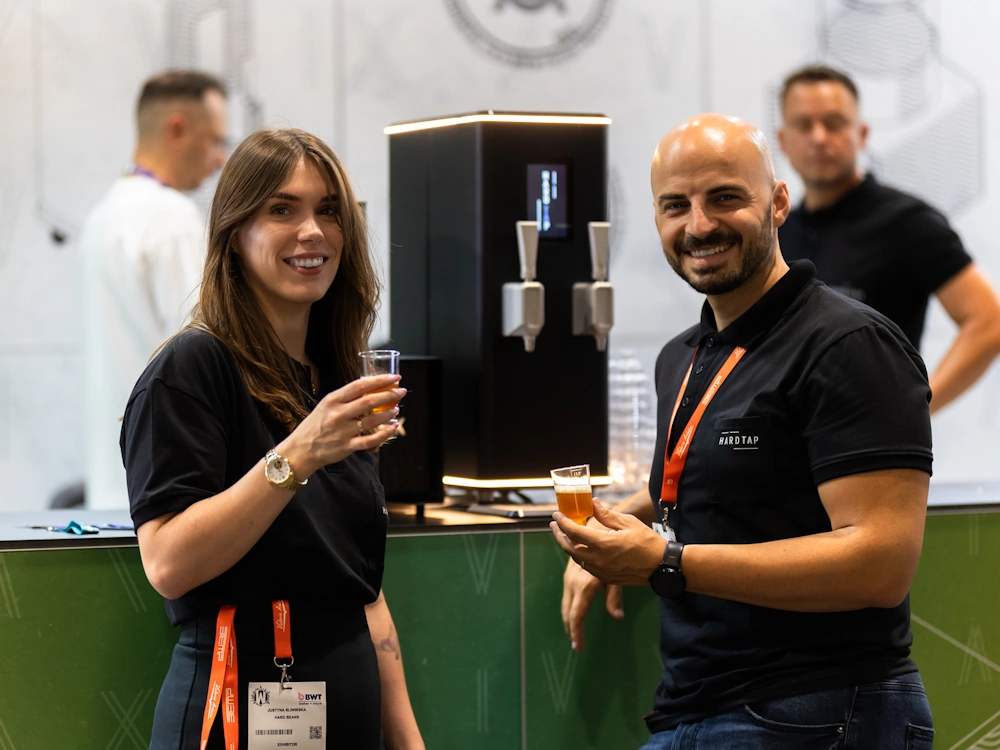
Purpose-built equipment can help close the gap. The Hardtap nitro dispenser is designed for café operations, featuring intuitive touchscreen controls that let staff dispense pre-batched cocktails and nitro beverages without specialist training.
Nitrogen infusion creates a creamy texture directly from the tap, removing the need for shakers and strainers. A capacity of up to 50 litres per hour also supports high-volume service during busy periods.
“The Hardtank is easy to use, to maintain, and to clean,” says Dany. “It increases speed while keeping pre-batched recipes high-quality, resulting in an increase in turnover without raising staff cost or the need for specifically built, expensive bar stations.”
Pre-batching cocktails
Pre-batching sits at the centre of making cocktails work in a café context. Bases, such as a rose and jasmine infusion or a hibiscus and pink pepper vodka base, are prepared in advance and loaded into the system. Staff can then serve complex drinks at speed without disrupting the flow of service.
Testing a new flavour profile becomes a batch session rather than a real-time experiment, which makes iteration far less disruptive to daily operations.
“With the Hardtap, it’s easy to serve customers multiple, smaller drinks with the same effort as creating one bigger drink,” Dany explains. “The classic way of making cocktails is more time-consuming, so adding one or more Hardtaps offers more flexibility; it can prepare two different drinks per machine.”

The benefits of offering cocktails
For coffee shops able to invest in a cocktail programme, the benefits extend well beyond an additional revenue stream. Cocktails carry higher margins than espresso-based drinks, and customers who order them tend to spend more per visit. Even a short menu of three or four drinks can shift average transaction value during evening hours, a meaningful gain for businesses operating on tight margins.
“Drawing in customers who would otherwise maybe not come in and adding experience for the guests, those are the real benefits,” says Rob.
A cocktail programme can also reposition a coffee shop’s identity, creating opportunities for events and collaborations that a daytime-only café would not typically have access to. For specialty coffee shops in particular, cocktails offer a way to extend the story they already tell through coffee: where it comes from, how it’s made, and why those details matter.
Mocktails present an equally strong opportunity. A recent YouGov survey of 18 to 24-year-olds in the UK shows Gen Z continue to be the most sober generation overall, with 39% of them not drinking alcohol at all. These consumers also tend to have high expectations for non-alcoholic options that feel as considered as the rest of the menu.
A ginger and passion fruit nitro lemonade or a coffee and cardamom mocktail, built on the same carefully prepared bases as the alcoholic menu, signals that a café takes all of its guests’ needs seriously.
Tapping into flavour trends
Current flavour trends in cocktail culture also play to the strengths of coffee shops. Dessert-inspired drinks, sweet-and-spicy combinations, and layered textures are all areas where coffee works as a natural base.
Rob points to Belgian endive, horseradish, and chocolate-pepper infusions as ingredients whose natural bitterness pairs well with coffee. “Trendwatchers claim the espresso martini is on a decline, but I don’t see proof of that. Dozens of variations are possible while playing with texture and flavour profile,” he adds.
Pre-batching with equipment like the Hardtap makes these kinds of experimental builds accessible, allowing cafés to respond to emerging trends without adding pressure to service.
A small, well-executed cocktail menu, delivered through a system like Hardtap that removes the technical barrier, gives coffee shops a genuine competitive advantage. The cafés most likely to succeed in this space are not those trying to become bars, but those applying the same standards they bring to sourcing and brewing to every drink they serve.

Cocktails are not the right move for every coffee shop. But for those with the right hours, the right atmosphere, and a willingness to experiment, they represent one of the more accessible ways to grow.
The operational barriers that once made cocktail service impractical in a café setting are increasingly manageable through considered menu design and equipment built for this environment.
What does not change is the need for clear thinking: a focused menu, a consistent workflow, and a firm idea of what the guest experience should look like.
Enjoyed this? Then read our article on how roasters can prioritise food safety when making cold brew.
Photo credits: Hardtank
Perfect Daily Grind
Please note: Hardtank is a sponsor of Perfect Daily Grind.
Want to read more articles like this? Sign up for our newsletter!
Source: Perfect Daily Grind