

Your cheat sheet to the GCR Leaders Symposium – BeanScene
In a world obsessed with growth, longevity depends less on size and more on foundations, daily habits, and long-term thinking. This, and other thought-provoking ideas, will be debated at the GCR Leaders Symposium.
Growth in coffee is often talked about in terms of volume, footprint, or revenue. But for a trio of industry leaders headlining the 2026 Global Coffee Report (GCR) Leaders Symposium that’s only the destination. To them, the secret to scaling businesses comes down to a clear strategy, cultural expectations, and the micro-behaviours of a cohesive team.
But what does this look like in practise?

“One of the biggest lessons I’ve learned is the importance of constantly reinvesting back into the business – in people, systems, equipment, and culture,” says Michael Rababi, Worldwide Director and Founder of Di Pacci Coffee Company, which started as a single suburban Sydney coffee cart to become one of the Southern Hemisphere’s largest coffee operations.
“Sustainable growth doesn’t come from extracting profits early, but from building strong foundations over time.”
This is just a snippet of what GCR Leaders Symposium attendees can expect over a sit-down breakfast on Friday 27 March 2026 in Melbourne – a city considered a jewel in the global coffee crown.
Taking place within the Melbourne International Coffee Expo (MICE), and moderated by Global Coffee Report Publisher Sarah Baker, the event is a rare opportunity for roasters, operators, and industry decision-makers to hear directly from leaders who have successfully navigated the challenges of growth, scale, and innovation in coffee.
The symposium will deliver insights that are specific, yet broad enough, to be translated into coffee markets across the world. Rababi, who also opened a AUD$25 million membership-based coffee roasting facility, The Roasting Club, in 2025, will bring real-world lessons to the opening session, How to Scale Smart.
The panel also includes counterparts Lachlan Ward, ST. ALi CEO, and Craig Dickson, Nomad Coffee Group Founder and CEO. Rounding out the quartet is Andrew Low, CEO of Coffee Supreme that today supplies more than 1000 cafés across New Zealand, Australia, and Japan, plus retail customers via online stores and New Zealand supermarkets.
Low brings strong credentials to the panel: Coffee Supreme acquired Sydney roaster Gabriel Coffee 12 months ago to accelerate its Australian expansion. Prior, he co-founded Ordermentum, a digital ordering and payment platform for Australian hospitality businesses, and he was the CEO of Toby’s Estate from 2010 to 2014.
In his experience scaling businesses, strategy sets the direction while culture ensures delivery.
“Scaling smartly comes down to a few fundamentals. One of those is hire for culture, train aggressively, and give autonomy,” he says.

“It’s also vital to set clear targets so that performance gaps are very transparent from day one; define success clearly and don’t leave it to interpretation as your view of success is not necessarily someone else’s.
“Test and learn by rolling out a product, pricing tactic, or strategy in one region before refining and reviewing. Only then should you invest at scale.”
Plus, it’s OK to change one’s mind.
“It’s also key to be honest with yourself if it’s not working – and be comfortable cutting quickly and resetting the playbook. I adopt a philosophy of strong opinions, lightly held … seek out opposing views and constructive challenge.”
Scaling up has been a big part of the ST. ALi story too. Today, the Melbourne business roasts around 1.5 million kilograms of beans per year, sold through wholesale, grocery and e-commerce channels.
It also operates seven cafés in Australia, Bali, Indonesia, and Manila, Philippines, with additional Bali and new Singapore sites coming soon.
“For a long time, particularly when I first started in the business, the cafés were the business and that’s where the brand has been built. But for us these days they’re the best organic way to experience the brand; we see them as billboards for the broader business,” Ward says. “Our South Melbourne café is our most successful salesperson in the business, because that café has won us more referrals and done more for the brand than any one person has.”
Ward says the secret to establishing a successful business, and then scaling it, comes down to working out the company’s differentiators.
“Even in a competitive and mature environment like Australia, new cafés and coffee brands continue to enter the market. The key is to identify what makes you unique early on and double down on it, rather than trying to copy everyone else. There’s room for everyone, but success comes from marching to the beat of your own drum,” he says.
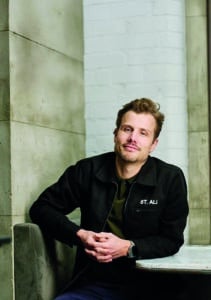
In St ALi’s case, this involves the energy poured into brand creativity and building an ecosystem around coffee.
“Coffee can be a vehicle for so many things and by extension it can command a lot of loyalty. So, we’ve spent a lot of time working out how can we create a brand around this product that makes people feel so good they don’t want to go anywhere else, and stretches the brand in different directions, becoming immersed and in different communities,” he says.
“Of course, everything is grounded in quality coffee – we’ve never strayed from that – but our strength lies in the brand and positioning we’ve developed.”
Dickson, whose Nomad Coffee Group operates Veneziano Coffee Roasters in Melbourne, says discipline is a key attribute.
“You need clear systems, the right technology, and strong people in place before you chase volume,” he says.
“Maintaining quality, culture and brand integrity becomes harder as you grow, so those foundations matter more than ever. Smart scaling also means listening closely to customers and staying adaptable, ensuring growth enhances the experience rather than diluting it.”
Other headline acts
Baker says this is just a slice of the quality content and insights attendees can expect at the GCR Leaders Symposium.
“We’re excited to welcome some of Australia’s most revered roasters to the GCR Leaders Symposium to share their wealth of knowledge and insights. It’s rare to have four of Australia’s largest company directors and CEOs on the one panel,” she says.
“But that’s only part of the story. Starbucks Australia CEO Braeden Lord will join the symposium for a keynote discussion examining the lessons of Starbucks Australia’s past, the realities behind its current resurgence, and the future of the brand as it looks to grow sustainably within Australia’s world-leading coffee culture.”
Lord will be joined by Winnie Nawei, Managing Director of Kenangan Coffee Australia who is leading the brand’s growth as it brings Indonesia’s most loved coffee experience to Australia. With others, she will discuss international success, the barriers to foreign business, and how they plan to adapt international identity within local markets. Also presenting will be Kate Langford, CEO of the Big Group, detailing the expansion of quality coffee in the wider hospitality industry.

For attendees, the value of the event lies not just in panels or presentations, but in the opportunity to engage directly with leaders.
“The coffee industry only moves forward when experienced operators pass on what they’ve learned. This event creates a space where ideas, mistakes, and successes can be shared honestly, helping the entire industry raise its standards,” Baker says.
Rababi echoes this, highlighting the personal responsibility of established leaders to contribute more broadly.
“I’ve always believed in giving back to the industry that has given me so much,” he says. “This is a privilege and an opportunity to contribute in a meaningful way, to help the next generation of coffee operators grow sustainably.”
Ward has similar motivations. In the coffee industry most businesses spend their waking hours focused on the cup or customer in front of them, he says.
“Opportunities for café owners or coffee professionals to get out of that environment, learn from others, and network are incredibly beneficial. For me, being part of that ecosystem has been invaluable over my journey in coffee,” Ward explains.
“Coffee attracts a certain kind of person – most of us get involved because we love the product. There’s no university for this. Being able to give back, share experiences, and have meaningful conversations with peers is really important.”
Because coffee is a highly competitive industry, Low says learning from others is essential. But getting access to ideas, tactics and strategies can be difficult to unlock.
“Events like the GCR Leaders Symposium give a safe, permissible place to share and learn,” he says. “I believe in the power of learning from collective experience, and feel a sense of responsibility as a senior leader in coffee to pay forward my experience – both the wins and the battle scars.”
Seats are limited and filling fast. For those serious about the future of their coffee business, and how it fits into a global context, missing the event is not an option, Baker says.
“The 2025 edition was sold-out – with the big drawcard being the influential voices from across the global coffee sector,” she says.
“We’re replicating that in 2026 and we can’t wait to see you there.”
The GCR Leaders Symposium is taking place within the MICE expo at the Café Education Stage (enter via Door 9). Registrations open at 8am.
For more information and tickets, visit here.
Source: Bean Scene Mag