

India's Newest Coffee Hub – CoffeeTalk

Juro Coffee House, located off India’s National Highway-2, is a chic European cafe that hosts a live roastery unit that was inaugurated in January by the Nagaland state government. The cafe serves green coffee beans from 12 districts in Nagaland, which are roasted live, ground, and served from farm to cup. On a typical day, the cafe gets about a hundred customers, sipping on coffee, with smoke breaks in between.
The state’s economy has depended on agriculture, with paddy, fruits like bananas and oranges, and green leafy vegetables like mustard leaves, the main crops grown traditionally. Now, a growing band of cafes, roasteries, and farms across the state are looking to give Nagaland a new identity by promoting locally grown Arabica and Robusta coffee.
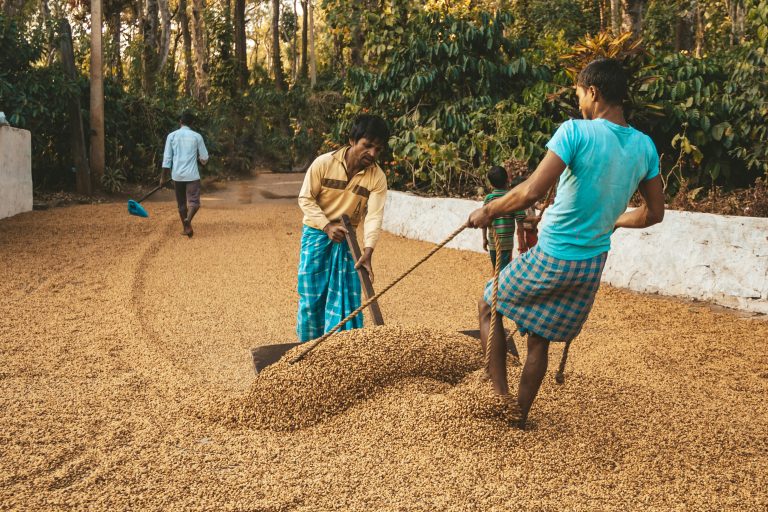
Coffee was first introduced to the state in 1981 by the Coffee Board of India, a body set up by the Indian government to promote coffee production. It only began to take off after 2014. Nagaland today has almost 250 coffee farms spread across 10,700 hectares of land in 11 districts. About 9,500 farmers are engaged in coffee cultivation, according to the state government. The small state bordering Myanmar today boasts of eight roastery units, besides homegrown cafes mushrooming in major cities like Dimapur and Kohima, and interior districts like Mokokchung and Mon.
Searon Yanthan, the founder of Juro Coffee House, believes that the journey began with COVID-19, when the pandemic forced Naga youth studying or working in other parts of India or abroad to return home. He believes that now it’s time to export their products and ideas, not the people.
Yanthan left Nagaland for higher studies in 2010, first landing up in the southern city of Chennai for high school and then the northern state of Punjab for his undergraduate studies. He dropped out to study in Bangalore, where he studied commerce but was good in entrepreneurship. He launched Lithanro Coffee, the parent company behind Juro, in 2021, and started visiting other farms, working with farmers on improving coffee quality and maintaining plantations. Once his own processing unit was set up, he began hosting other coffee farmers, offering them a manually brewed cup of their own produce.
Yanthan sees coffee as an opportunity for Nagaland’s youth to dream of economic prospects beyond jobs in the government, the only aspiration for millions of Naga families in a state where private-sector employment has historically been uncertain. He believes that coffee could also serve as a vehicle to bring people together.
In 2015, the state government of Nagaland handed over the responsibility of coffee development to the Land Resources Department (LRD), allowing coffee roasters, buyers, and farmers to build online links with the outside world. This change has led to an increase in India’s coffee exports, with production doubling compared to 2020-21. The LRD also invests in post-harvest processes by providing coffee pulpers, setting up washing stations, curing units, and supporting entrepreneurs with roastery units.
Lichan Humtsoe, who set up his company Ete in 2016, was the first in the state to source, serve, and supply Naga specialty coffee. Today, Ete runs its own cafes, roasteries, and a coffee laboratory, researching the chemical properties of indigenous fruits as flavor notes. Ete also has a coffee school in Nagaland and a campus in the neighboring state of Manipur with a dedicated curriculum and training facilities to foster the next generation of coffee professionals.
Building a coffee culture in Nagaland is challenging due to decades of unrest leaving the state in need of infrastructure and almost completely reliant on federal funding. Growing up in the 1990s, Humtsoe wanted nothing to do with India and stopped speaking Nagamese, a bridge dialect among the state’s 16 tribes and a creole version of the Indian language, Assamese. He grew disillusioned with the political solution rooted in separatism that armed groups sought, and the irony of the state’s dependence on funds from New Delhi hit the now 39-year-old. Coffee became his own path to self-determination, and he now focuses on inspiring India through coffee.
Nagaland, India, is the seventh-largest producer of coffee, but it is far behind export-heavy countries like Brazil, Vietnam, Colombia, and Italy. The coffee revolution in the state is helping the state preserve its forests by avoiding land clearing and transitioning from traditional slash-and-burn techniques to agroforestry. The LRD buys seed varieties from the Coffee Board for farmers, and growers make more money than before. However, profits are not huge, as farmers still engage in jhum cultivation, the traditional slash-and-burn method of farming practiced by Indigenous tribes in northeastern hills.
The state government has set up some washing stations and curing units, but many more are needed for these facilities to be accessible to all farmers. Intercropping with horticultural crops like black pepper is not fully taking off, and the state’s efforts to promote sustainable agriculture have not fully taken off. Recent satellite data suggests that shifting cultivation, or jhum, may be rising again.
Nagaaland Coffee, the state’s first certified barista in 2018, has a high-ever production of 48 metric tonnes (MT) in 2024, which supplies 40 cafes across India, of which 12 are in the Northeast region. Naga coffee is already making waves internationally, winning silver at the Aurora International Taste Challenge in South Africa in 2022 and then gold in 2023. To aim for export, Nagaland Coffee needs to produce 80-100 MT every year.
Despite these challenges grounding Naga farmers and entrepreneurs in reality, their dreams are soaring. Humtsoe hopes for speciality coffee from Nagaland to soon be GI tagged, like varieties from Coorg, Chikmagalur, Araku Valley, and Wayanad in southern India. He wants good coffee from India to be associated with Nagas, not just Nagaland, and that “People of the land must become the brand.”
Read More @ Aljazeera
Source: Coffee Talk