

Crunching the numbers that will shape Australia's café scene in 2027 – BeanScene

The resilience of Australia’s café industry has been highlighted in a new report, which also identifies some potential trends that could shape the next year of business and beyond.
Australia’s café customers are changing. While younger consumers continue to drive beverage trends, it’s older Australians who are increasingly driving revenue, according to new industry data that reveals a café sector adapting to shifting consumer habits rather than shrinking under economic pressure.
Anonymised data from Hey You and Westpac Data X’s 2026 Daily Brew Report has offered a range of insights into the trends shaping the scene.
All data from the report comes from June 2026, with all growth or shrinking percentages compared to a dataset from June 2025.
While the numbers may not tell a story of runaway growth, they do show that the café industry remains deeply embedded in the daily routine of many Australians.
At an estimated annual value of $10.15 billion, Australia’s café market remains one of the country’s largest foodservice categories. Consumers spent almost $750 million in cafés during June 2026 alone – and that’s despite a small slip of 1.4 per cent in year-on-year category spending.
Importantly, that minor decline wasn’t driven by customers spending less when they visited. Instead, it was the result of a reduction in customer numbers and visit frequency.
While average monthly spend per customer remained virtually unchanged at $87.73, average order value rose from $17.68 to $17.90.
Orders per customer dipped from 4.96 to 4.90, suggesting Australians are becoming slightly more selective about when they visit cafés rather than abandoning the ritual altogether.
More than 600 café owners were surveyed as part of the report, with 83 per cent noticing a decline in customer visits over the past year.
Around half the café owners expressed concern about the year ahead, although approximately one-third identified themselves as optimistic about future trading conditions.
That national average coffee price reached $4.69 in June 2026, up just 1.65 per cent year-on-year. This is the slowest rate of coffee price growth since 2020 and rising at about 60 per cent of the pace of broader inflation.
Rather than relying solely on menu price increases, many operators appear to be focusing on promotions, loyalty initiatives, and operational efficiencies to maintain value for customers.
Perhaps the most intriguing – and even surprising – element of the report centres on who is driving café spending.
While much focus is given to younger consumers – as they are the most likely to try new beverages, influence social media trends, and shape broader modern café culture – the data suggests older customers are the most valuable to a venue.
Consumers aged 65 to 74 bucked the wider trend of the data, increasing their café visitation by 1.9 per cent year-on-year. This rises to a four per cent increase in customers over 75.
Conversely, consumers aged between 18 and 24 reduced visits by 6.5 per cent, while the 25 to 34 bracket reduced visits by 4.1 per cent.
Older Australians were also found to be spending more when they visit. Average transaction value of customers aged 75 and over was $21.81, while 18 to 24-year-olds spent $15.98, a gap of about 36 per cent.
Customers over 55 now account for almost one third of total café spend nationally.
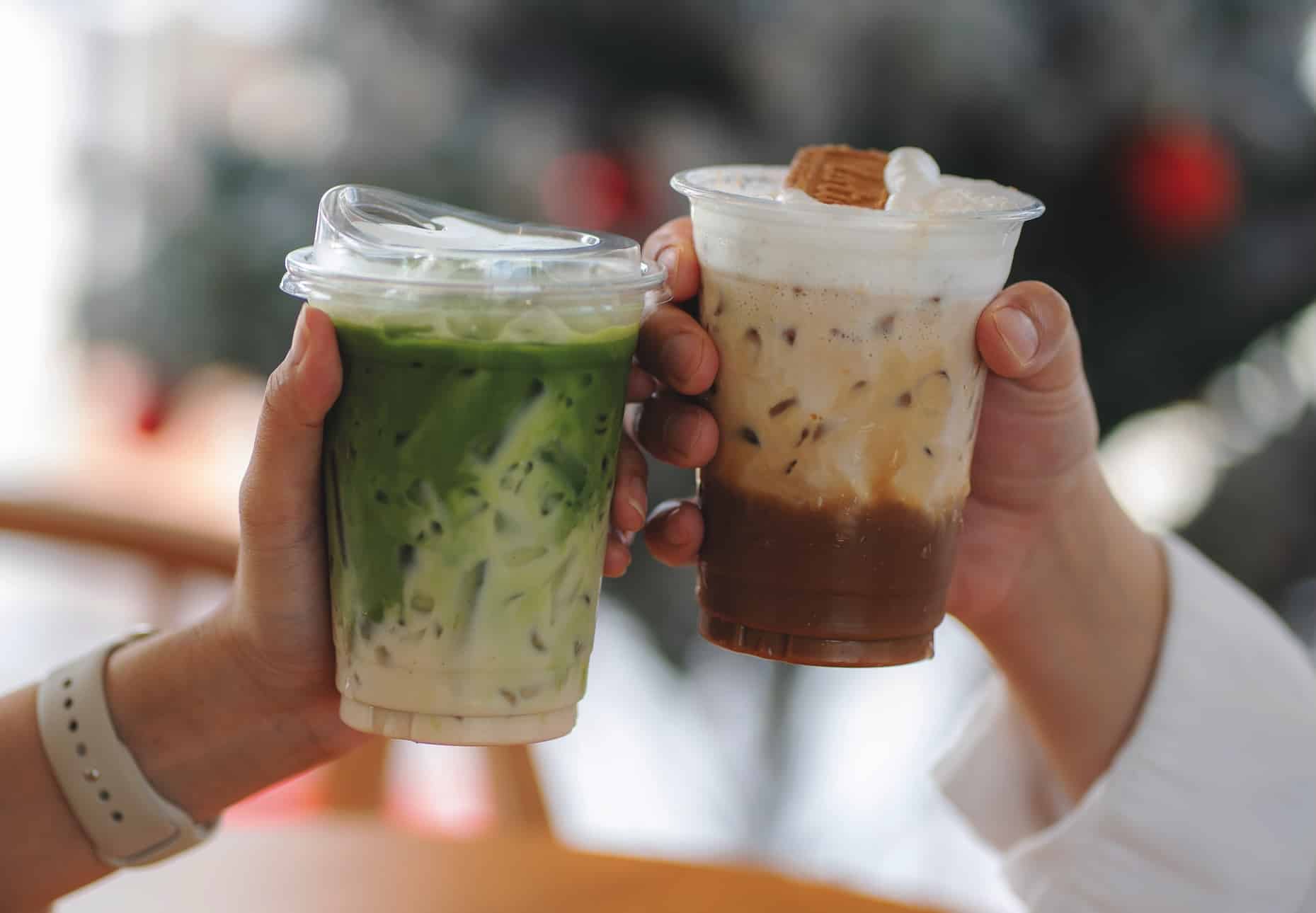
That doesn’t mean younger customers have lost their importance. Matcha recorded a 133 per cent increase in year-on-year orders, with that growth largely driven by consumers under 35.
While cafés remain overwhelmingly an in-person experience, with 93 per cent of spending occurring face-to-face, online transactions did increase by 4.1 per cent to account for the remaining seven per cent of total category spend.
The average online purchase far exceeded in-person purchases, reaching $47 compared to $17, which may reflect the growth in workplace coffee runs and group orders.
This suggests digital ordering may help unlock higher-value transactions, while products such as matcha can help bring new audiences through the door.
Breaking the data down by states shows Australia’s overall coffee market is not at all uniform.
Victoria maintained the nation’s lowest average coffee price at $4.61, with Melbourne recording a 1.1 per cent increase in spend to $149.8 million. Western Australia’s average coffee price climbed to $5.22, while New South Wales and South Australia remained comparatively stable at $4.66 and $4.70 respectively.
Tasmania, on the other hand, recorded the highest average coffee price at $5.44, while Queensland saw the fastest annual coffee price growth at 7.81 per cent.
Taken together, all these findings point to an industry that is adapting to the current economic climate, with operators continuing to navigate softer foot traffic with innovation and the creation of new ways to connect with customers
The market at a glance
➜ Annual café market value estimated $10.15 billion
➜ $749.9 million spend in cafés in June 2026
➜ National average coffee price $4.69
➜ Coffee prices up 1.65% YoY
➜ Average order value of $17.90
Trends shaping 2027
➜ Matcha orders up 133%
➜ Promotional orders up 90%
➜ Online ordering up 4.1%
➜ Online orders average $47
➜ In-person orders average $17
➜ 93% of café spending occurs in-store
Average coffee prices*
➜ Tas: $5.44 (+3.3% YoY)
➜ WA: $5.22 (+5.3% YoY)
➜ QLD: $5.17 (+7.8% YoY)
➜ SA: $4.70 (+1.7% YoY)
➜ NSW: $4.66 (+1.3% YoY)
➜ VIC: $4.61 (+1.1% YoY)
*Data at June 2026
This article appears in the October 2026 edition of BeanScene. Subscribe HERE.
Source: Bean Scene Mag