

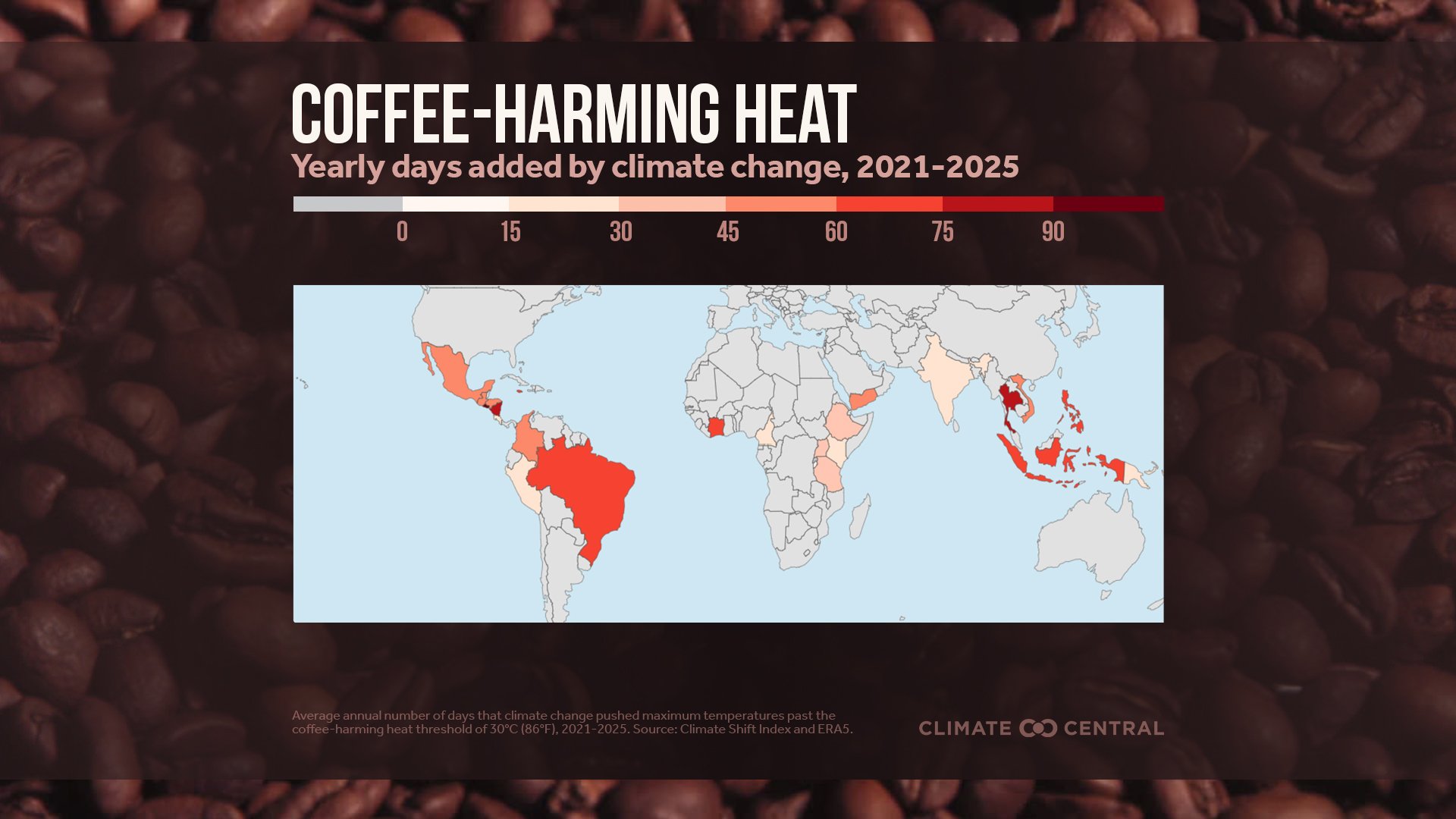
Origin Has Been Experiencing An Average Of 47 Extra Days Of Coffee-Harming Heat Each Year Due To Climate Change – CoffeeTalk

Coffee, a cherished beverage with over 2 billion cups consumed daily worldwide, faces increasing production challenges and costs. Approximately two-thirds of adults in the U.S. partake in this drink daily, yet global coffee prices have fluctuated, hitting record highs in late 2024 and early 2025. Factors attributing to these price hikes include tariffs on Brazilian imports, which constitute about one-third of U.S. coffee supplies, and detrimental weather conditions affecting coffee cultivation, particularly in regions known as “the bean belt.”
Coffee plants require specific temperature and rainfall conditions; deviations can significantly impact harvest quality and yield. Climate change has raised temperatures in vital coffee-growing areas, exacerbating heat conditions detrimental to coffee production. A study from Climate Central indicated that more frequent occurrences of harmful heat, over the critical threshold of 30°C (86°F), have been documented in 25 major coffee-producing countries from 2021 to 2025. These countries, which represent approximately 97% of global coffee production, encountered an average increase of 47 extra heat days per year attributed to climate change. Notably, Brazil, Vietnam, Colombia, Indonesia, and Ethiopia, which collectively supply about 75% of the world’s coffee, experience more than 144 days annually of damaging heat, with Brazil alone averaging 187 days, countered by a potential reduction of 57 days absent climate change effects.
Arabica coffee, a more heat-sensitive plant variant, makes up 60-70% of the global coffee supply and struggles under elevated temperatures, with growth hampered even in lower temperature ranges of 25-30°C. The analysis noted additional stressors such as changing rainfall patterns and the rise of pests and diseases, all of which compound the challenges faced by coffee growers.
The future viability of coffee farming is threatened as climate change potentially reduces the suitable land for cultivation by up to 50% by 2050 without adaptive measures. Despite these challenges, coffee farming may transition to new regions as previous unsuitable areas may become viable due to warmer temperatures. Yet, such shifts could provoke deforestation as farmers seek cooler elevations. Integrating sustainable practices—such as fostering shaded environments—can aid in balancing coffee yield with climate resilience.
In summary, the dynamics of climate change pose significant risks to coffee production and economics, necessitating urgent adaptation strategies among farmers, particularly smallholders dependent on coffee for their livelihoods. Insights from the study emphasize the need for sustainable agricultural practices to mitigate these impacts while considering future agricultural landscapes amid ongoing climate alterations.
Read More @ Climate Central
Source: Coffee Talk