

How Darkstar Coffee went supernova – BeanScene

Perth’s Darkstar Coffee reveals how upgrading to an IMF roasting plant helped it stay competitive in the rapidly evolving coffee market.
With volatile green bean prices, widespread labour shortages, rising gas prices, and cost of living impacting consumer spending, the coffee industry has faced a series of hurdles since the turn of the decade.
For many roasters and cafés, pivoting their business strategy or product portfolio has been essential to staying profitable. Customer expectations, drinks trends, and equipment are changing faster than ever before. Sitting still is no longer a viable option.
In Western Australia, seasoned coffee professional Giulio Cozza took over Darkstar Coffee in 2018, just before the pandemic kicked off a period of uncertainty for the sector. With more than 40 years of experience under his belt, Giulio knew he would need to adapt the established roastery alongside the evolving market to ensure it remained competitive.
“With the introduction of new technology and consumers expecting high-quality coffee, the market is evolving very quickly. You’re constantly playing catch up,” says Giulio.
“When we acquired Darkstar it was a small specialty roastery. We had always had plans to expand the business – we moved to a bigger facility in Osborne Park in 2019 – but when the pandemic sent the industry into turmoil we realised we needed to do more than just grow.
“We inherited an old-school roaster, so we quickly began looking for new roasting equipment that could support our expansion and ensure consistency.”
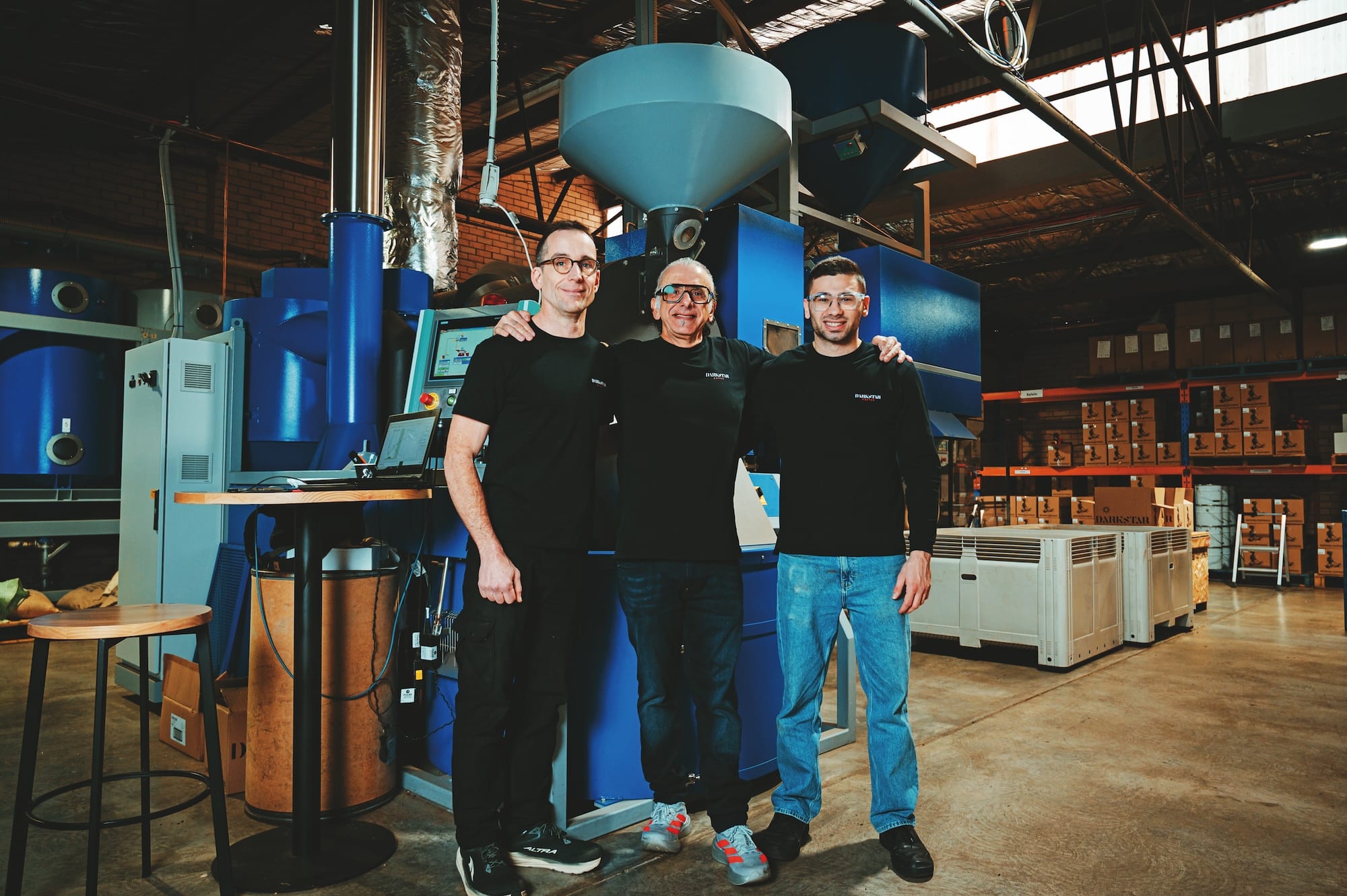
To achieve this, they invested in a complete turnkey IMF roasting plant. The roastery’s original manual roaster was replaced with a 60-kilogram roaster, auto loader, destoner, 200-kilogram blender, and six one-tonne green bean silos.
“We flew to Italy and spent time with a few manufacturers, but IMF really stood out from the crowd,” he says.
“I visited the factory in Occhiobello and was really impressed by the quality of the craftsmanship. What stood out most, however, was that the people building the roasters were coffee people – they understood coffee and the technology.”
Overseen by IMF’s Australasian agent Will Notaras from Roastquip, the manufacturer sent two engineers from Italy who spent two weeks in Perth installing the equipment, getting it up and running, and ensuring the Darkstar team felt confident using it. According to Giulio, the team are thrilled with the roasting plant.
“It’s one of the best roasters in the world and, in terms of the coffee, we are very happy with the result,” he says.

Tim Pullin operating the IMF 60-kilogram roaster. Image: Darkstar Coffee.
“The consistency of the roast is amazing and that’s the most important factor for a roastery like ours. If our coffee isn’t consistent, we aren’t delivering the high level of service we aim to deliver for our customers.”
For Head Roaster Tim Pullin, one of the most impressive elements of the equipment is the automation it provides, which he says has improved the roastery’s workflow.
“In the space of a week, the IMF significantly increased efficiency and optimised workflow,” he says.
Darkstar invested in six one-tonne green bean silos in which to store its coffees by origin. With built-in scales, these silos pre-weigh the beans before loading them directly into the 60-kilogram roaster.
The team roasts the origins separately to get the best out of each component, with each origin being of a different screen size, moisture content, and density. Therefore, once the coffees for a blend are roasted they’re automatically transferred into the 200-kilogram blender according to the recipe. The whole system is seamlessly connected from storage to blending.
“The automation the equipment provides is the key factor. I’m able to preset the roast curves using set points and it does everything for me. At any time during the roast, I can manually override the profile if required,” says Tim.
“It’s insanely consistent. I’ll double check and make sure it stays honest and it does. The temperature control is to one degree accuracy, so you can trust it.”
When presetting the roast, the user can control the bean and air temperature, as well as drum speed and air flow at each of the 12 set points throughout the profile. Up to 1000 profiles can be stored.
“The ability to air roast is one of the biggest benefits of the IMF,” says Tim. “It gives our coffee the X factor. You can highlight notes, get the cleanest roast, and lay it on the palate at the end of it.
“If you tried to roast tonnes of coffee in the exact same way with an old-school roaster with no automation, it would be more challenging to maintain consistency.”
The 60-kilogram roaster also features recirculating heat technology that saves up to 30 per cent in gas consumption compared with other roasters fitted with a separate afterburner.
Another factor the Darkstar team praise is the ongoing support they’ve received from agent Will Notaras and the team at the IMF headquarters in Italy.
“The service has been nothing short of incredible,” says Giulio. “If there’s ever a problem, we call them up and we’ll quickly have an engineer on a video call helping us out. They are also able to log into the system remotely and diagnose any technical issues. They’ve been fantastic every time we’ve needed their help.”
In the past three years, the roastery has also invested in a 15-kilogram IMF roaster to have more control over its single origins and smaller batches. What’s more, the team have introduced an on-site ‘experience lab’ café and training academy, plus expanded to the building next door to establish a commercial machine servicing and repairs operation.
According to Assistant Manager Marcus Cozza, these don’t just provide additional revenue streams but also a full-circle offering for Darkstar’s wholesale customers.
“We want to be a one-stop-shop for our wholesale clients. You can roast the best coffee in the world, but if you don’t supply the best equipment, ensure it’s working at full capacity, and train the baristas how to use it properly, it’s very hard to produce a consistently great cup,” he says.
“Cafés want to feel supported by their roasting partner, and this enables us to provide the best service possible.”
The experience lab serves as a platform for Darkstar to showcase its coffees to consumers and potential industry partners. It also opens the door to domestic machine sales, a market Giulio says is booming.
“In the past two years we’ve seen a huge surge in interest in domestic coffee machines. Coffee is becoming a passion for more and more people, and a lot of them are willing to spend between $6000 and $9000 on a machine,” he says.
“We also offer barista classes for the public, so they’re able to recreate the coffees they love at our café at home using equipment we’ve provided.”
While the addition of the machine sales, café, and academy elements have helped Darkstar remain competitive, Giulio and Marcus say investing in the state-of-the-art IMF roastery means their coffee stays at the top of its game as the industry continues to change.
For more information, visit roastquip.com.au
This article appears in the October 2026 edition of BeanScene. Subscribe HERE.
Source: Bean Scene Mag