

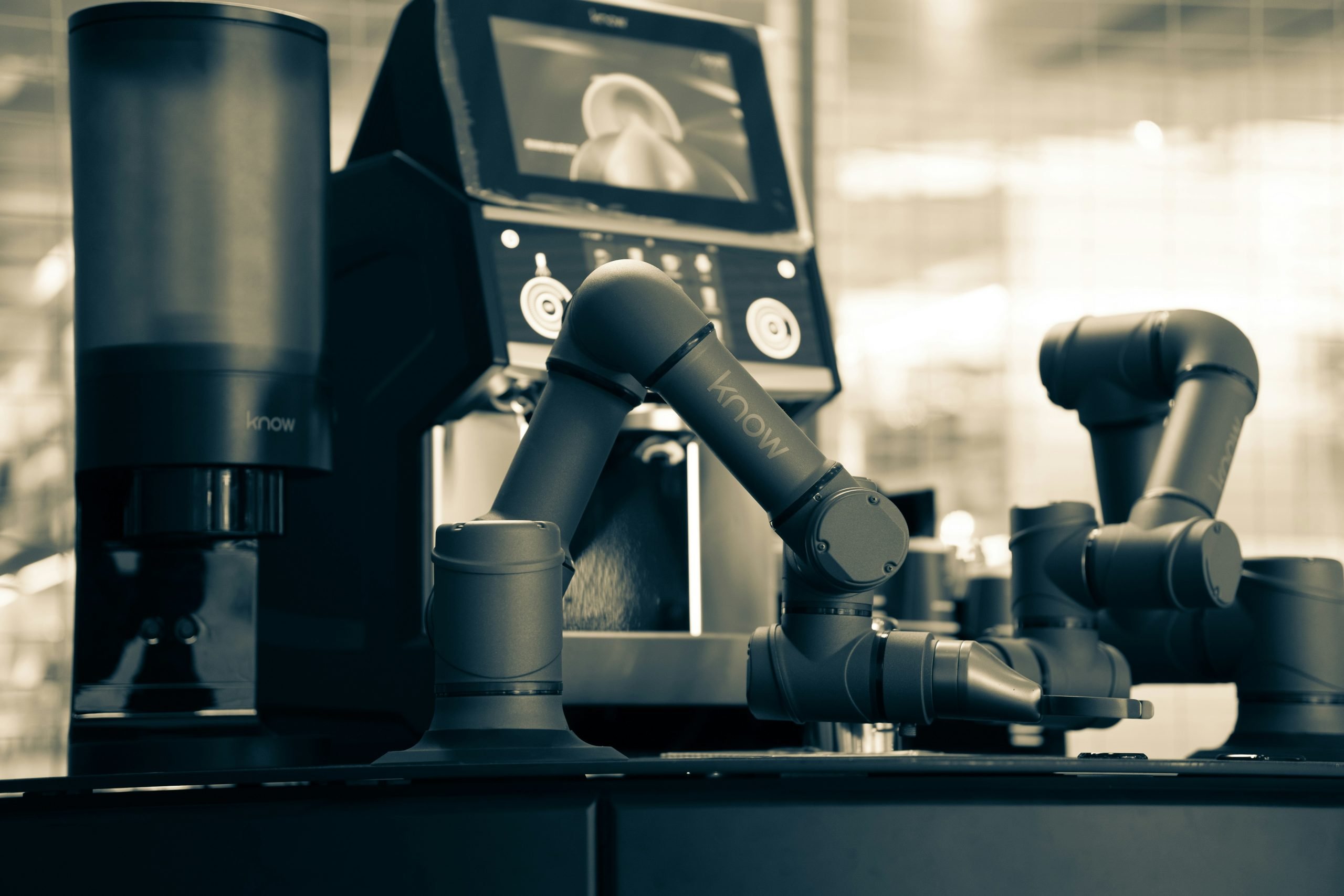
The $4 Billion Robotic Barista Boom: How AI Coffee Kiosks Are Reshaping Global Retail in 2026 – CoffeeTalk

The global robotic barista market has achieved a significant milestone, valued at $2.18 billion in 2026, and is projected to reach $4.05 billion by 2030, growing at a compound annual growth rate (CAGR) of 16.8%. This shift is influenced by labor shortages, rising costs, and a consumer preference for 24/7 service. The Robot Barista Global Market Report 2026 from GII Research indicates growth from $1.86 billion in 2025 driven by escalating labor costs in Western markets, where traditional cafes allocate 25% to 35% of revenue to labor. With barista turnover rates exceeding 75% annually, the financial benefits of AI-powered kiosks become evident; these units can replace about six barista roles, saving operators $40,000 to $80,000 annually. The return on investment for robotic systems can materialize quickly, typically within a payback period of two to four months in high-traffic areas.
One of the most crucial advantages of robotic kiosks is their continuous operational capability, capturing off-hours sales that traditional cafes miss. Data shows off-hour sales can represent up to 22% of revenue in vital locations like airports. The Asia-Pacific region, particularly China, Japan, and South Korea, is leading in the adoption of these automated solutions, while Europe emphasizes sustainability and digital payment integration. North America shows rapid growth through corporate deployments.
Technological advancements have enhanced the maturity of robotic coffee systems, ensuring brewing consistency of 98% with operational efficiencies that reduce per-cup production costs between $0.30 and $0.70. Innovative features, like image-customized latte art, have transformed commodity coffee into experiential products, allowing for premium pricing.
The introduction of turnkey solutions is facilitating market entry by offering comprehensive packages, thereby lowering the complexity of managing robotic systems across multiple sites. This model simplifies the deployment process for operators lacking prior experience in food service or robotics.
Overall, the scalability and efficiency of robotic coffee kiosks are attracting interest from venture capitalists and franchise operators, allowing for horizontal expansion with centralized management. Industry projections predict continued double-digit growth through 2030, spurred by persistent labor shortages and advancements in technology. The AI Coffee Vending Robot segment alone is expected to grow from $1.418 billion in 2025 to $3.122 billion by 2032.
Read More @ openPR
Source: Coffee Talk