


Coffee Omakase & the Rise of the Experiential Café
How curated tastings are changing how we consume coffee.
BY LEILANI GARCIA
BARISTA MAGAZINE ONLINE
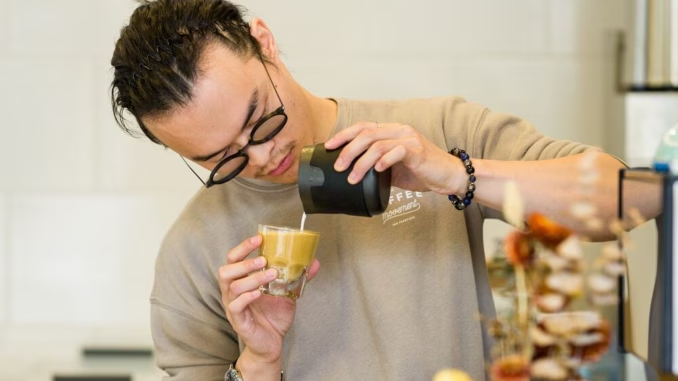
Featured photo: Kieran Eng, co-founder of San Francisco, Calif.’s Komakase Coffee. Photos courtesy of Komakase Coffee.
Coffee is no longer just something you grab on the way to work. In a growing number of specialty cafés, it’s becoming something you sit down for and fully experience.
Enter coffee omakase: a curated, multi-course tasting experience in which baristas take the lead, guiding guests through a curated sequence of coffees designed to highlight origin, processing, and flavor. Borrowed from the Japanese dining tradition of omakase (the word literally meaning “I’ll leave it up to you”), this approach shifts coffee from a quick transaction to something more intentional and immersive.
Traditionally, omakase refers to a dining style in which guests trust a chef to curate a series of courses. The experience is often intimate, with guests seated at a counter as each course is prepared in real time. At its core, omakase is about trust—an exchange between guest and host, in which one offers skill and intention while the other relinquishes control.
Omakase in the coffee world
Coffee omakase brings that same philosophy into the café setting. As Kieran Eng and Josh D’Esposito, co-founders of San Francisco, Calif.’s Komakase Coffee, explain, “The core concept of any omakase is asking for our guests’ trust. We’re asking patrons to leave it up to us to decide what coffees they can enjoy and how to serve them.”
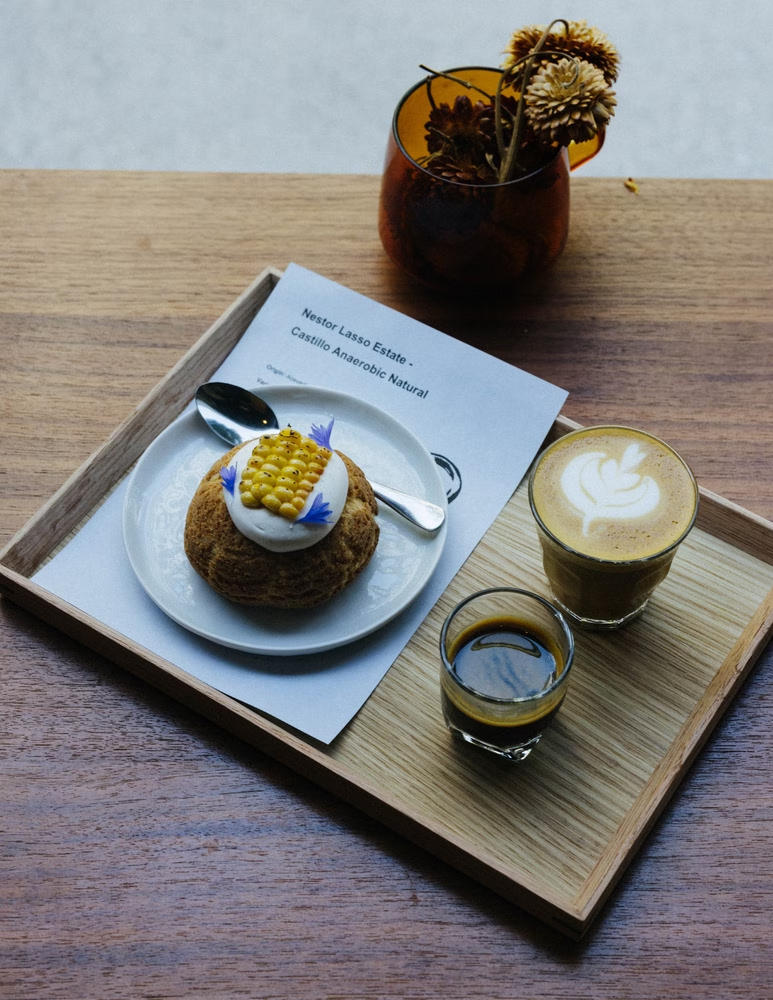
Rather than ordering a single drink, guests are guided through a curated tasting in which a barista selects and prepares multiple coffees, often served sequentially like a tasting menu. Each course may showcase a different brewing method, origin, or processing technique, offering a deeper understanding of coffee’s complexity and range.
While still relatively new, coffee omakase has been quietly emerging within specialty coffee over the past five to ten years. More recently, it has gained visibility as cafés experiment with more experiential formats and customers increasingly seek out offerings that go beyond the traditional menu.

Part of coffee omakase’s appeal lies in accessibility. For customers, especially those newer to specialty coffee, omakase removes the pressure of navigating unfamiliar terminology or “ordering correctly,” replacing it with guided discovery. It also offers access to rare or high-end coffees while creating space for direct interaction with skilled baristas.
“The response has been insanely positive,” Kieran and Josh shared with Barista Magazine. “Much of the feedback centers on the opportunity to taste coffees in a comfortable yet structured environment, guided through a sequence that highlights the full range of flavor coffee has to offer.”
Reshaping the café experience
Coffee omakase represents a shift away from transactional service and toward something more intentional.
Instead of a quick order-and-go model, the experience centers on sitting, engaging, and tasting. Beyond simply purchasing a beverage, customers get to participate in a guided experience that unfolds over time.
This shift naturally changes the role of the barista.
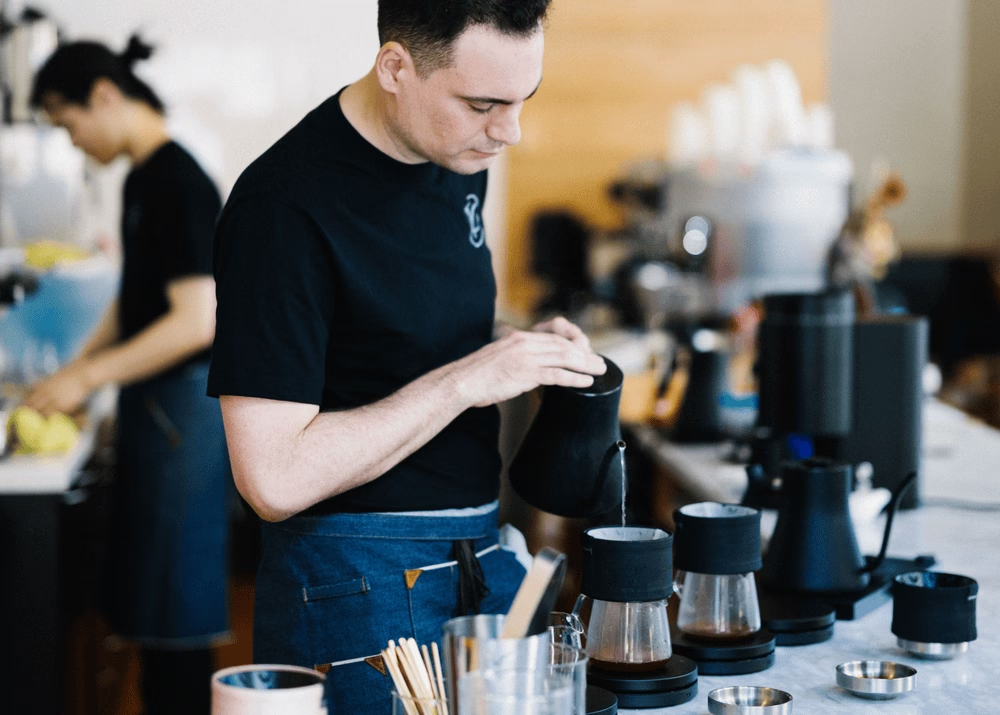
In an omakase setting, the barista becomes a host and educator, stepping out from behind the bar to lead the experience. They introduce each coffee, explain origin and processing, and guide guests through flavor profiles and brewing decisions.
“Our guided tastings provide contextual information that might be missing from a quick café visit,” Kieran and Josh explain. “Many people don’t realize coffee comes from a fruit and that its acidity and sweetness come from complex organic processes.”
This emphasis on storytelling and education deepens customer engagement. Guests leave not only having tasted multiple coffees, but with a stronger understanding of what they’re drinking—often leading to greater appreciation and long-term loyalty.
An elevated cup
At the same time, omakase introduces a more premium café model.
With limited seating, curated menus, and higher-touch service, cafés are able to explore new pricing structures and revenue streams. Rare coffees, reservation-based experiences, and multi-course tastings allow coffee to move closer to the realm of fine dining while still maintaining a sense of accessibility.
“Our goal is to maintain approachability to these ‘fancy’ coffees while elevating the experience around them at an affordable price,” says Komakase Coffee.
In this way, coffee omakase doesn’t just change how coffee is served; it reframes what a café can be.
As specialty coffee continues to evolve, experiences like omakase point to a broader shift in how cafés engage with their customers. While it may not replace the everyday coffee routine, it expands the role of the café beyond convenience, positioning it as a space for education, storytelling, and hospitality.

Paving the way for more mindful consumption
In many ways, coffee omakase reflects a broader movement across food and beverage, where consumers are increasingly drawn to experiences over transactions. Tasting menus, chef’s counters, and guided pairings have become more popular in restaurants, and specialty coffee appears to be following a similar path.
“Our hope is that as people deepen their understanding of how coffee is made, they begin to appreciate the work behind it and seek out experiences that give them more context for why we love coffee,” Kieran and Josh add.
As cafés look for new ways to stand out in a competitive market, curated experiences like omakase offer something that cannot be easily replicated: time, attention, and a deeper level of engagement. This shift signals that coffee is not just something to drink, but something to experience.
ABOUT THE AUTHOR
Leilani Garcia (she/her) is a coffee writer and creator behind Bean Juice Head, where she explores coffee culture, storytelling, and the evolving café experience. Her work focuses on the intersection of community, identity, and modern coffee spaces. Follow her work at beanjuicehead.substack.com and on Instagram @beanjuicehead.

Subscribe and More!
As always, you can get a hard copy of Barista Magazine by subscribing or ordering an issue.
Support Barista Magazine and show your love with a Membership.
Signup for our weekly newsletter.
Join us at Camp Coffee Shop Aug. 10-13 in Napa, California.
Read the April + May 2026 21st Anniversary Issue for free with our digital edition.
For free access to more than six years’ worth of issues, visit our digital edition archives here.
Source: Barista Magazine