

Little Treat Culture + Specialty Coffee: Dominating the Nonalcoholic Beverage Craze

Why coffee mocktails are the industry’s latest obsession.
BY MELINA DEVONEY
FOR BARISTA MAGAZINE
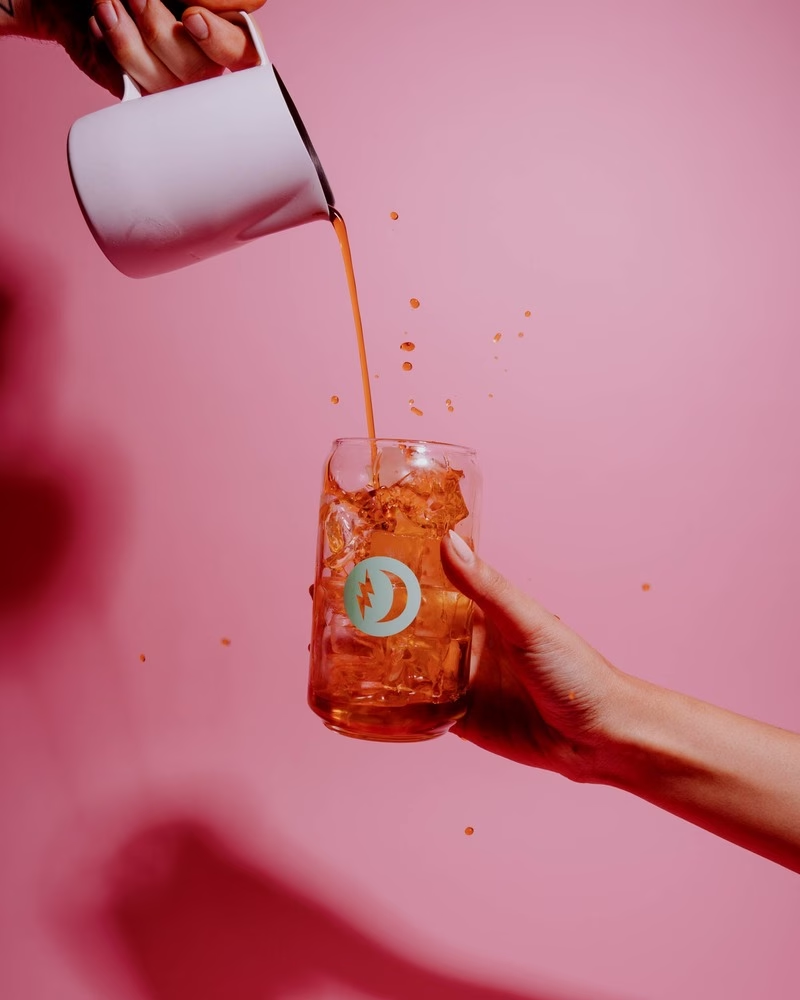
Photos courtesy of Dayglow Coffee
Editor’s note: This is a condensed version of the original article, which appeared in the December 2024 + January 2025 print issue of Barista Magazine. Click here to read the full piece.
A group of 20-somethings sits on a picnic blanket drinking canned mocktails and barrel-aged cold brews, snacking on “little treats,” and swaying to Chappell Roan from a portable speaker … and, of course, posting photos of it all on social media.
This is the mellow and refined vibe of Gen Z culture painted by Modern Times Coffee’s Gabrielle Rosenberger, program manager, and Daniel Velasquez, production roaster, along with Fernando Laredanager, who manages the whimsical restaurant the Invigatorium.
Healthy “little treats” are trendier than booze
The 2020s have seen quite the nonalcoholic (NA) craze as younger generations consider the impact their consumption has on their bodies, minds, and environment. From the pandemic-induced dip in craft-beer sales to 2024’s declining wine consumption in the United States and Europe (despite natural wines being so in vogue!), younger consumers are opting for the countless lower-alcohol drinks and NA alternatives.
Modern Times is a brewery/roastery with multiple coffee, food, and drink joints in the San Diego area, including the café/bar collaboration with J & Tony’s Negroni Warehouse called the Invigatorium. At all its locations, gen Z patrons, in particular, are ordering less beer than ever in favor of hard seltzers, kombuchas, light ciders, and NA bevs, while its coffee customers are going for more delicate and playful options like single-origin cold brews. Modern Times updated their menus to match this industry-wide shift in demand.
“The craft-beer industry that San Diego once was is definitely feeling a strong shift towards NA cocktails, lighter, more refreshing drinks, and coffee,” Gabrielle says. She attributes this to an appreciation of refined flavors over the desire to get tipsy. Fernando adds that clubbing culture seems to be waning as young people pack into local craft breweries, wineries, bars, and cafés instead.
As gen Z scrutinizes drink labels for adaptogens and functional ingredients, their desire for comfort, innovation, and conscious eating, aka “little treat” culture, is equally strong. Cafés are meeting the demand for healthy, mindful, and indulgent experiences, with sweet mocktails boasting coffee’s caffeine and antioxidants as their prime functional ingredients.
Barrel-aging coffee laid the groundwork
According to Gabriella, barrel aging with bourbon barrels can elevate a chocolatey Central American coffee to a flavor explosion of creamy custard and eggnog.
This miracle begins by diligently sourcing a complementary combination of barrel, spirit, and coffee. The first step is acquiring the barrel, either one given a second life from a distillery, brewery, or winery, or one bought new (which then must be seasoned). The barrels must be completely dry, which can take up to four weeks for a large American-standard barrel. Green coffee is then poured in and allowed to “dry-age,” which takes one to four weeks in a small, 20-liter barrel, or up to three months in a large one.
Because every coffee’s bean texture and density is different, constantly monitoring the aging process is essential to find the ideal intensity; this means checking the aroma and appearance of beans weekly and sample-roasting when it seems like they’ve soaked up enough boozy essence. Once the sample roast is just right, the rest of the beans are roasted. Depending on the strength of the oak and spirit, each barrel can be used up to three times, or maybe a few more after a refresh with the original spirit.
In 2014, Modern Times’ brewers had been barrel-aging for years, and its roasters wanted a turn. In contrast to the coffee industry at that time, the beer industry has always been very collaborative, Gabrielle says. Sharing this mindset, Modern Times’ brewers helped the coffee team apply their knowledge of barrel-aging to coffee and fine-tune it over the years. “Honestly, we just winged it,” Daniel laughs. It went surprisingly well, and they never looked back.
Modern Times clients initially reacted to barrel-aged coffee with disbelief that it contained zero alcohol, Daniel recalls. “People who look for (barrel-aged coffee) now are people who love it and strictly
want that flavor,” he says.
The structure of Modern Times Beer + Coffee makes it easy for Daniel to snag spent barrels from its brewery next door, or go in on orders for new barrels used for stouts and special project brews.
The path to barrel-aging coffee was more circuitous for Leon Nie, founder and roaster of Regent Coffee, a coffee roaster/retailer with two cafés in Los Angeles. Leon grew up in China and became a banker and home coffee roaster. The first specialty roastery-café he opened in China failed, sending Leon deep into studying coffee and planning how to differentiate his next business. He moved to Los Angeles in 2015 and sold coffee at farmers markets until he opened Regent in 2017. The point of differentiation that Leon was looking for came a year later when his friend gifted him a whiskey bottle full of coffee beans aged post-roast.
“The coffee was so oily and dark,” Leon says with a grin as he remembers the first sip. “It tasted like cigarette ash.”
Nonetheless, Leon became determined to master barrel-aging coffee. Despite the lack of resources then, Leon knew he should roast the coffee after aging it and start small with a five-liter barrel. Having roasted over 200 different types of coffees in his career, Leon intuited correctly that a washed Ethiopian coffee would be delicious as his first bourbon barrel-aged coffee.
Leon now buys new 20-liter American oak barrels and seasons them using a young whiskey with sharp floral and fruity notes that don’t overpower the coffee. That’s the fun part, Leon says: Barrel-aging allows roasters to tinker with an entirely new range of profiles that they can’t get from different coffee varieties or on-farm practices.

Crafting alluring mocktails with barrel-aged coffee
Leon highlights Regent’s barrel-aged espresso and cold brew through a short-and-sweet menu featuring barrel-aged signature mocktails. Regent’s barrel-aged espresso hoppers empty quickly now that regulars are cognizant of the taste, and mocktail nights at the café are gaining traction. Most of Regent’s customers discovered barrel-aged coffee for the first time at Leon’s shop, and nearly all of them have reported being happily surprised. “Most of the time, if you make it into a sweetened drink, like a Lavender Bourbon Buzz or vanilla flat white, nobody complains,” Leon says.
Regent’s signature Lavender Bourbon Buzz exemplifies how Leon builds out classic cocktail recipes into unique coffee versions. In creating the drink, he started with a classic espresso tonic, swapped in bourbon barrel-aged espresso, added house-made lavender syrup to round it out with a slightly sweet, bright flavor and full mouthfeel, and then topped it with a slice of dried lime for a zingy aroma and visuals. He delicately structures the sensory experience of each signature drink by balancing inventive ingredients with layers of distinct texture.
“You don’t want to go over the boundary, like making a drink with too many concepts and charging too much,” Leon says.
Mocktail recipes require highly accurate execution and training, meaning that baristas essentially become mixologists—or “baristologists,” as they’re called at Regent. For Leon, crafting these complex beverages and the hours put into barrel-aging beans are worthwhile investments. Finding the sweet spot between streamlined and extraordinary signature drinks means survival for a small business like Regent. “We have no chance if you lose consistency and uniqueness,” Leon says.
For the Invigatorium, crossing over ingredients between its bar and café was a no-brainer in terms of differentiation, efficiency, and customer demand. “People come in here to spike their coffee all the time,” Fernando laughs. He’ll suggest Nonino Amaro or Mr. Black Coffee Liqueur, but sometimes just a shot of whiskey will do.
The Invigatorium’s first coffee cocktail was a spin on a carajillo using Amargo-Vallet. They’ve since conjured up equally enticing mocktails for younger guests. That’s because they understand that social media trends and aesthetics are driving Invigatorium sales. Customers frequently order drinks they saw on viral videos, like flavored cold foam and cream tops. Fernando usually has just the thing, like an Einspänner-inspired cold brew with vanilla cardamom cold foam. It’s got optics, it’s sweet, and it’s a hit.
“People come here to see pretty visual stuff but also don’t want to sacrifice quality or flavor,” Fernando says.
While Fernando takes the pulse of café and bar culture, Modern Times tweaks blend ratios and roasts to complement what guests are looking for just around the corner at the roastery. “It’s helpful that our roastery is so close because it does allow us to be really hands-on,” Gabrielle says.
The NA craze has real staying power as spirit-inspired coffee ingredients expand
“The shift to NA is an opportunity to continue this trend of enjoying a wonderful libation and also being able to be productive in your day,” Gabrielle says. Going hand-in-hand with this shift is the reinvention of coffee from being just a morning boost and alcohol from being nothing more than a nightcap.
“These new coffee drink recipes lend themselves to sipping something in the afternoon or a nice little drink before or after dinner,” Gabrielle says. She doubts the appeal of an excuse to drink coffee at all hours of the day will fade any time soon.

Distilled … coffee?
Indeed, cross-industry collaboration is creating previously unimaginable NA bevs. The next trending ingredient may come from an age-old practice of the alcohol industry: distillation.
Almost a decade ago, Tohm Ifergan, founder and CEO of Dayglow, developed a coffee distillation method for his U.S. Barista Championship routine (although he eventually dropped out of the competition when his band went on tour). His recipe maintains roughly 30% of caffeine per volume and has been the focal ingredient in mocktails at Dayglow since Tohm opened their first café in 2017.
Dayglow is a multi-roaster subscription service that now has cafés in Los Angeles, Chicago, and New York, where the café space merges with a taproom of its sister brand, Niteglow. Niteglow serves alcoholic versions of Dayglow’s signature drinks, plus a coffee stout using Dayglow coffee. “It was important to me to offer beverages that showed versatility and not just flavored lattes,” Tohm says. He had cut back on alcohol for health reasons and wanted to offer a functional NA spirit.
“The first version I infused with different botanicals, including coffee blossom and juniper berries, to make a gin and tonic,” he says. Not being limited by the drink medium allows Dayglow to offer more whimsical treats like the Totoro, which features black sesame, orange blossom, charcoal, honey, distilled coffee, and optional coffee liquor and yuzushu.
With coffee’s ability to emulate its alcoholic counterparts while offering more functional benefits, Tohm predicts it will continue to take a larger share of the NA space. “I expect to see more spaces evolving into all-day cafés/bars and blending those cultures, with NA at the forefront,” Tohm says.
In explaining how the NA trend supports what the specialty-coffee industry values, Gabrielle says, “So much work goes into getting a plant ready to produce a high-quality coffee, then get it here, roast
it, and serve it. I’m happy that it’s getting a shining moment in this nonalcoholic surge because it deserves to be an ingredient that is focused on and appreciated.”
This article originally appeared in the December 2024 + January 2025 issue of Barista Magazine.
ABOUT THE AUTHOR
Melina Devoney (she/her) is a barista and freelance writer in Los Angeles zeroed in on coffee and agriculture. She aims to amplify the voices of farmers and a diversity of perspectives within the coffee industry, and she’s happiest when running on wooded trails and dancing at concerts.

Subscribe and More!
As always, you can read Barista Magazine in paper by subscribing or ordering an issue.
Support Barista Magazine with a Membership.
Signup for our weekly newsletter.
Read the February + March 2026 Issue for free with our digital edition.
Source: Barista Magazine