
Championing Inclusive Barista Training for Deaf Baristas in China
Meet Jocalm Chen: one of China’s first barista trainers to deliver coffee education in sign language.
BY SARAH CHARLES
BARISTA MAGAZINE ONLINE
Photos courtesy of Jocalm Chen
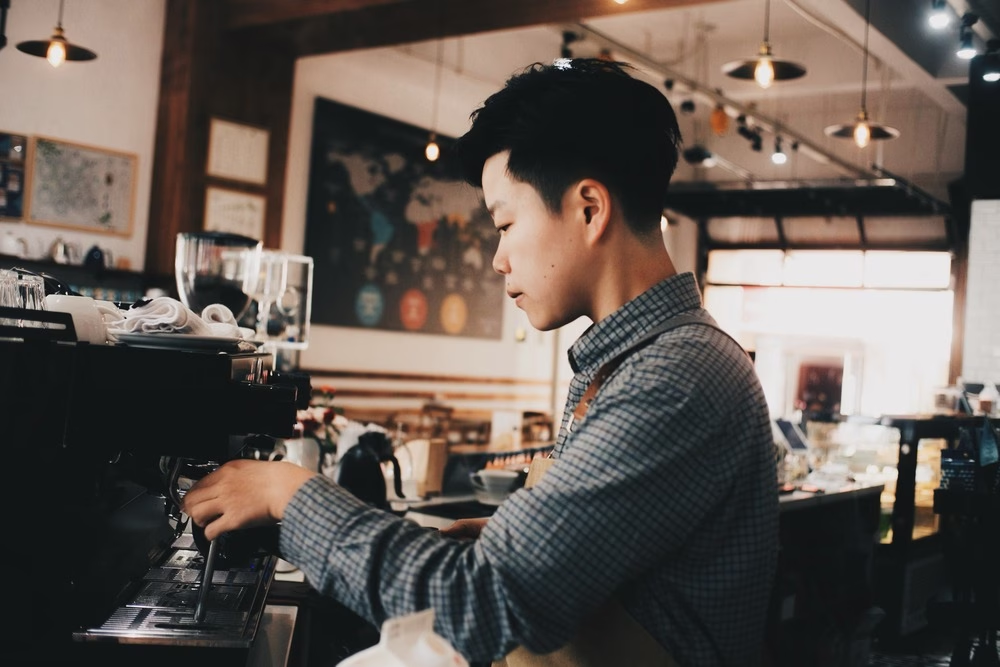
In Pu’er City, in China’s Yunnan province, a quiet revolution in coffee education is unfolding. Barista and educator Jocalm Chen recently became a certified barista trainer through the Sustainable Coffee Institute (SCI). For China’s growing specialty coffee community, the achievement is significant. For the country’s deaf community, where an estimated 28 million people face some hearing loss, it is groundbreaking.
Jocalm, who is deaf, is now one of the first trainers in China to deliver coffee education in sign language. Her journey challenges assumptions about who can teach, compete, or lead in the coffee industry.
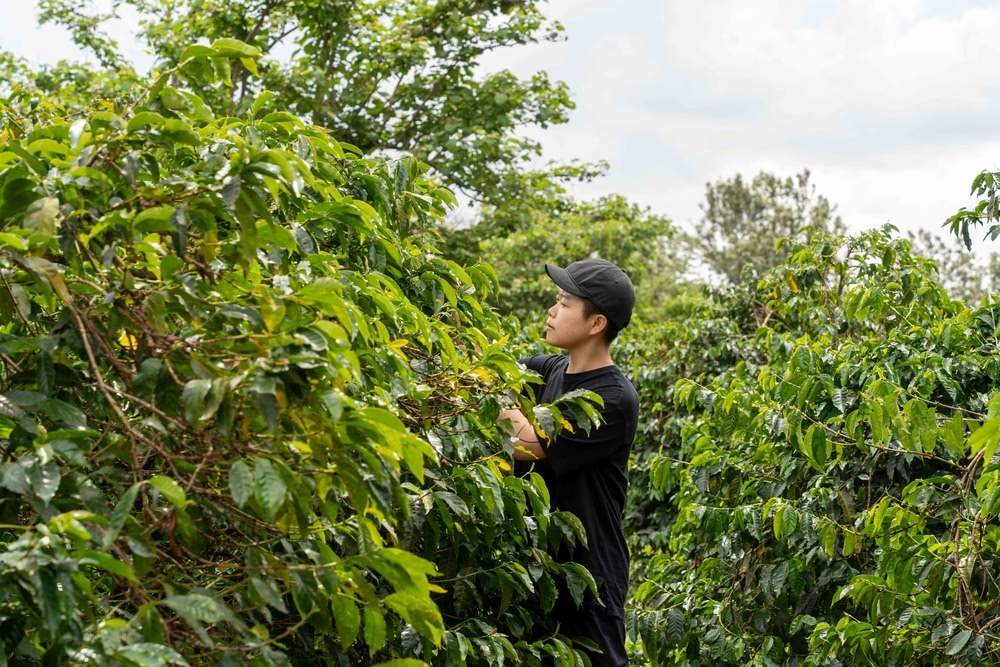
“By obtaining Q Grader and SCI Barista Trainer certifications, I not only gained systematic professional knowledge and teaching skills, but more importantly, it gave me greater confidence and helped me realize that I, too, can teach and guide others,” Jocalm told Barista Magazine. “Many deaf individuals are not incapable of learning coffee skills—they just lack an educational method they can truly understand. I hope the inclusion of sign language will make coffee courses genuinely accessible.”
For Jocalm, teaching is not only about passing on brewing techniques or sensory analysis. It is about representation. “My growth can serve as an example to inspire others in the deaf community—to show that we are not limited to working behind the scenes; we can also be frontline teachers and hold professional authority,” she says.
Deafness remains a stigma in China that many have strived to overcome over the years, demanding “equal education, not special education” and implementing initiatives like those of the Borgen Project, a non-profit organization that is addressing poverty and hunger and working towards ending them—including through projects designed to help the deaf community.
Building Inclusive Pathways
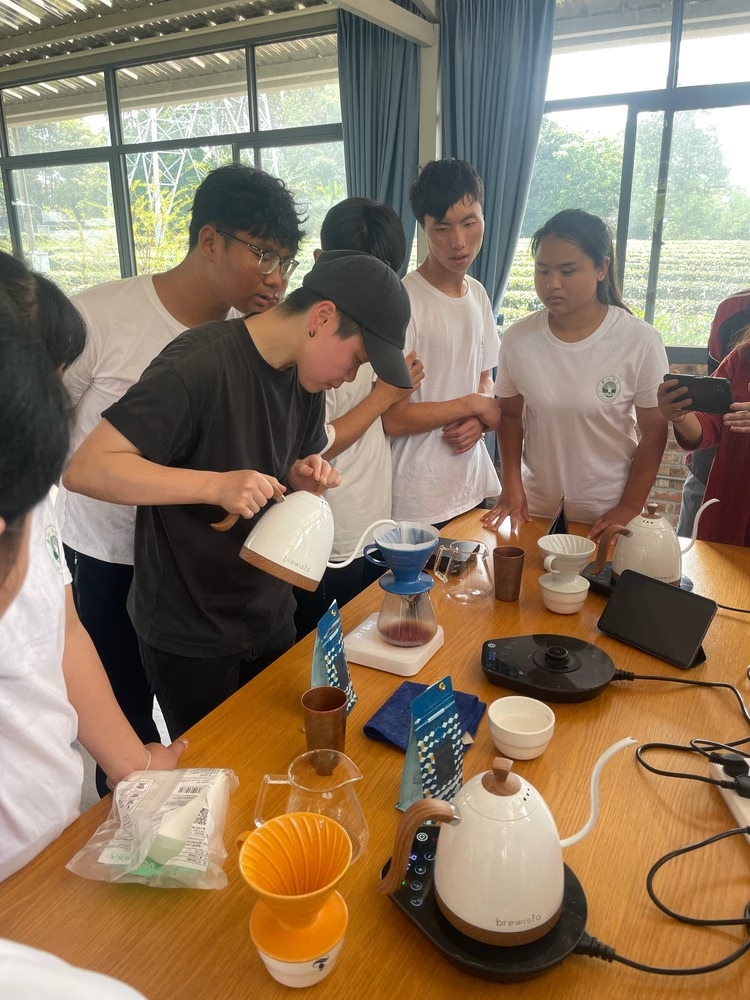
Jocalm’s work is part of a wider effort in China to make specialty coffee more inclusive. Marty Pollack of Torch Coffee—a coffee producing, roasting, and education company that has spent the last decade building deep, on-the-ground relationships with producers in Yunnan, Guatemala, and Kenya—has long invested in supporting the deaf community through training programs, sensory workshops, and hiring graduates in his cafés.
Marty notes that creating opportunities for deaf baristas doesn’t just benefit individuals—it strengthens the industry: “When you have a team that includes different ways of communicating and perceiving coffee, it pushes everyone to be more intentional and creative.”
For deaf professionals, however, the barriers remain steep. Jocalm points out three main challenges:
- Communication hurdles with customers and colleagues who are unsure how to interact with a deaf person.
- Lack of sign language support in training and competition environments.
- Heavy reliance on verbal communication in coffee shops, from last-minute customer requests to equipment issues.
Jocalm has adapted by advocating for clear communication methods from the start, whether through simple sign language, WeChat messages, or written notes. “I’ve learned to communicate more proactively instead of waiting passively,” she says. “A little shamelessness can be a good thing.”
She also leverages social media to bridge gaps, posting videos that share both coffee knowledge and sign language tutorials. A recent highlight she shares was interviewing Marty entirely in sign language, which he is also fluent in.
A New Model for Coffee Education
By formalizing her training role, Jocalm is helping redefine what accessible education looks like in China. Sign language courses, she argues, don’t just benefit deaf students; they enrich the entire coffee community. “It provides a cross-cultural experience for hearing individuals as well, such as in cafés that have deaf baristas,” she says.
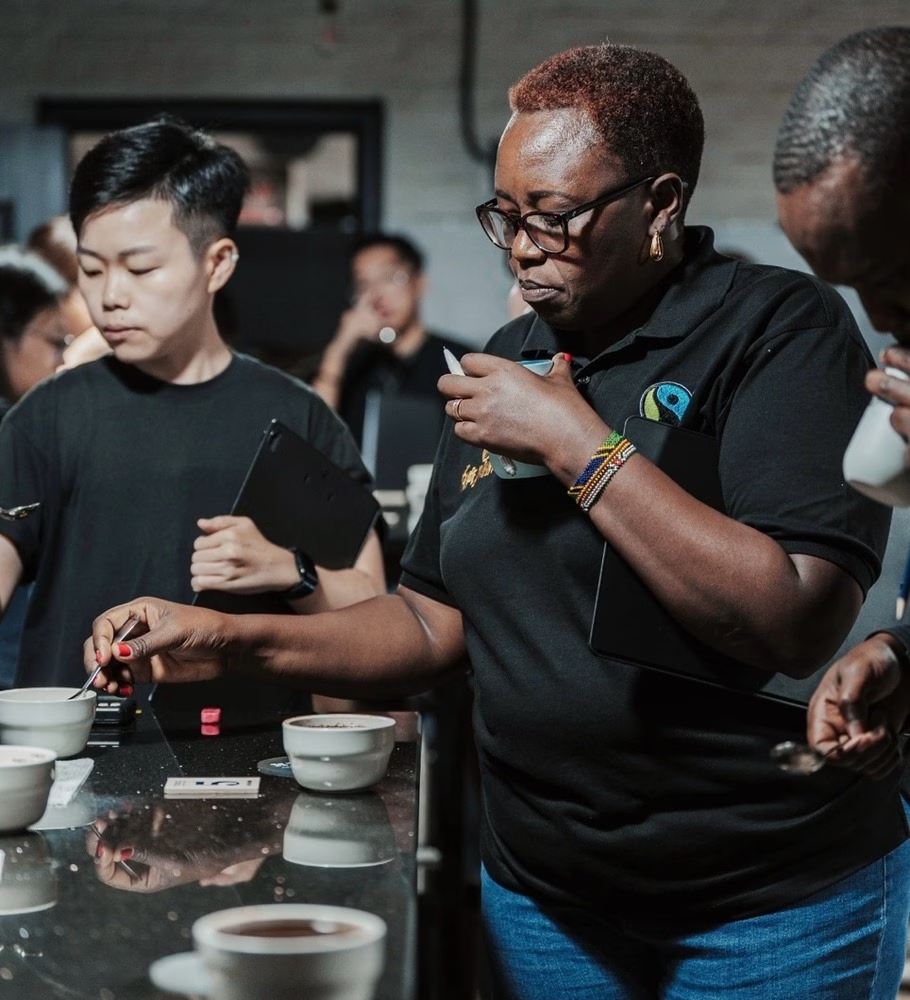
Jocalm emphasizes that her path was made possible by others who believed in her, especially colleagues who encouraged her to pursue teaching: “Without their support, I might not have made it this far. I hope one day I can give back and be someone else’s guiding light too.”
As she continues to teach in Pu’er—potentially expanding to Shanghai—her certification marks more than a personal triumph. It represents a shift in how the coffee industry in China, and globally, can recognize and nurture diverse talent. By championing inclusivity, Jocalm is ensuring that coffee education development in her country is matched with the richness of equal opportunity.
ABOUT THE AUTHOR
Sarah Charles (she/her) is a senior editor and writer who makes sense of the world’s messiest systems—climate, trade, culture, food—through sharp storytelling, fresh angles, and analysis. She translates global politics and economics into stories that show how they shape our daily lives, and vice versa. You can reach her at sarahcharlz@gmail.com.
Subscribe and More!
As always, you can read Barista Magazine in paper by subscribing or ordering an issue.
Read the October + November 2025 Issue for free with our digital edition.
For free access to more than five years’ worth of issues, visit our digital edition archives here.
Source: Barista Magazine