

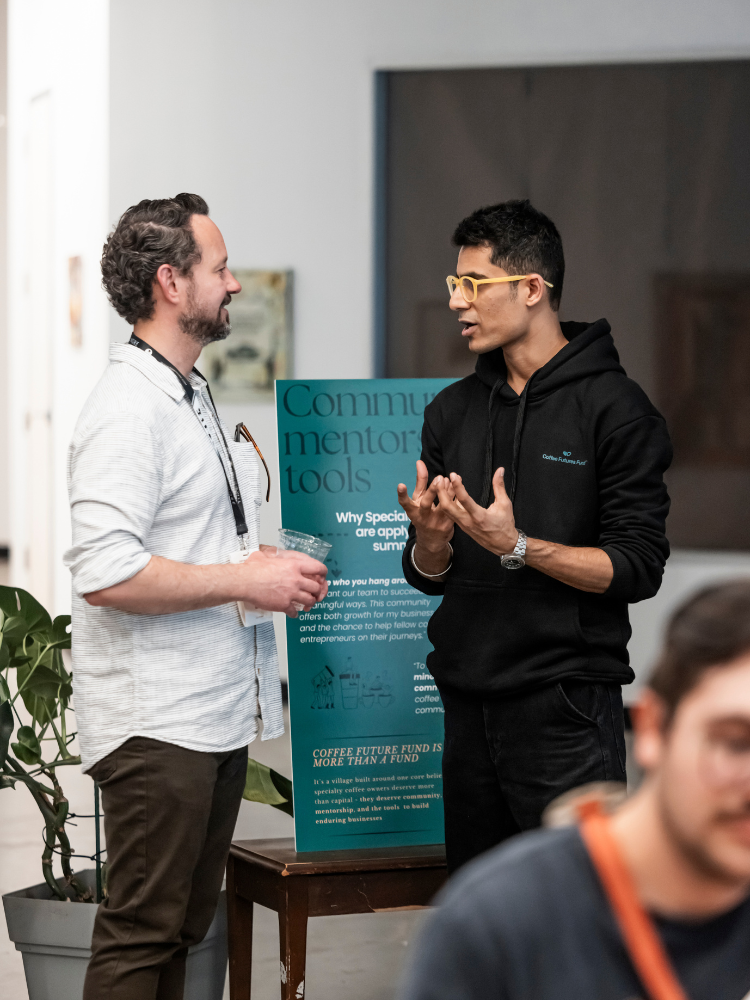
Who’s Teaching Coffee Shop Owners How to Succeed?

A look at Coffee Futures Fund, the organization helping independent café owners navigate the realities of entrepreneurship.
BY DELILAH L. MORRIS
FOR BARISTA MAGAZINE
Photos courtesy of Coffee Futures Fund unless otherwise noted
What to know:
- Roughly six out of 10 independent coffee shops fail to make it beyond their first 5 years of service; according to Akshat Khandelwal, founder of Coffee Futures Fund (CFF), this isn’t due to a lack in quality of coffee or hospitality but rather, a lack of guidance and support
- CFF is an organization dedicated to helping independent café owners through mentorship, community-building, education, and, in some cases, financial investment
- Through CFF, Akshat’s goal is to double the odds of independent coffee shops surviving long-term
For the past three decades, specialty coffee has become remarkably good at teaching people how to make exceptional coffee. Baristas can attend competitions, take sensory courses, earn certifications, and spend countless hours perfecting extraction, latte art, and brewing techniques. Roasters have unprecedented access to education on sourcing, roasting science, and quality control. There has never been more information available about coffee itself.
But when it comes to running a successful café, the path is often far less clear. How much capital do you really need before opening your doors? When is the right time to hire your first manager? Should you sign a lease for a second location? How do you build a team that can thrive without depending on the owner every hour of every day?
According to entrepreneur Akshat Khandelwal, these are the questions that determine whether a coffee business survives, but they’re also the ones many owners are left to answer alone.
“Our industry has done real justice to the product over the last 30 years,” he says. “The sourcing, the quality, the story we tell about a cup of coffee has gotten incredibly sophisticated. We haven’t done the same justice to the people behind the counter. We’ve taught owners how to make great coffee. We never taught them how to run the business around it.”
That realization led Akshat to launch the Coffee Futures Fund (CFF), an organization dedicated to helping independent café owners navigate the realities of entrepreneurship through mentorship, community, education, and in some cases, financial investment.
Rather than focusing solely on funding, CFF is built around the idea that business guidance is just as valuable as capital. “It’s not that the information is missing,” Akshat explains. “There’s plenty of that through YouTube, podcasts, and courses. A video can teach you the concept. It can’t tell you whether your situation is normal, or what you’re missing, or what happens next for you specifically. Only someone who’s actually been through it can do that.”
The business behind the bar
The statistics surrounding independent cafés are sobering. Akshat points out that roughly six out of 10 independent coffee shops fail to make it beyond their first five years, not because they serve poor coffee, but because owners often lack access to experienced guidance when the stakes become highest.
Money certainly plays a role. Opening a specialty café can require anywhere from $100,000 to $300,000 once build-out, equipment, and operating capital are taken into account. Traditional financing isn’t always accessible, leaving many entrepreneurs undercapitalized before they even unlock the front door. Yet Akshat believes the greater obstacle is something less tangible.
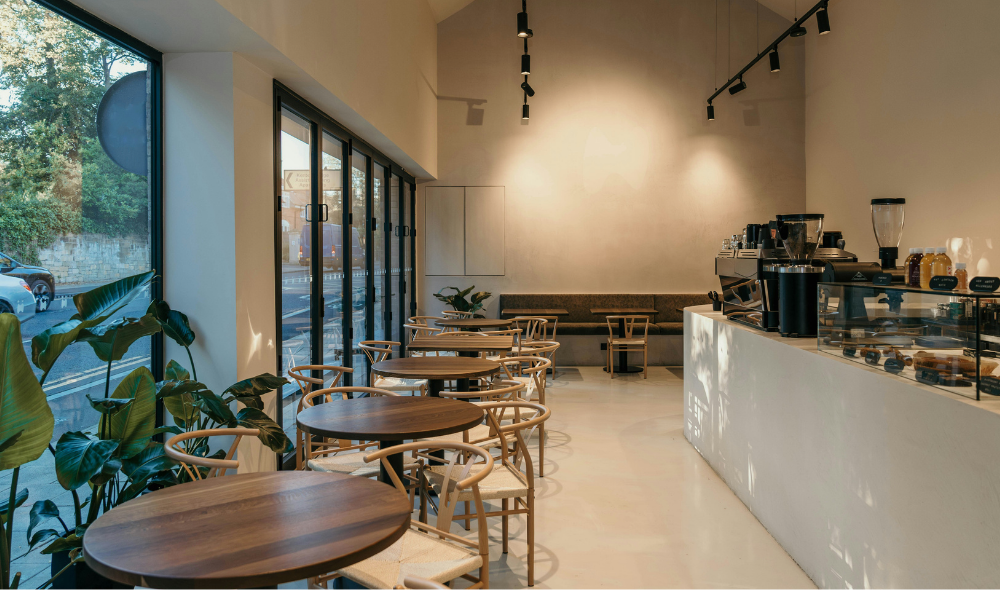
“The barrier I run into more often,” he says, “is that people don’t have an honest picture of what the first three years look like.”
He recalls spending months visiting café owners before opening his own business. Most offered the same advice: Don’t do it. “They weren’t trying to discourage me,” he says. “It was an honest answer because nobody had ever given them a real account of what the first few years would be like.”
Those realities include broken espresso machines, razor-thin margins, difficult staffing decisions, and the surprising fact that many owners earn less than the employees they manage during the early years of business. “The ones who get an honest picture and still want it tend to be ready,” he says. “The ones who see it clearly and walk away are making a good call too.”
Building a village
Coffee Futures Fund didn’t begin as an investment vehicle. It began as a conversation.
For five years, Akshat organized small roundtables where café owners met regularly to discuss real business problems with peers facing similar challenges. Those discussions eventually evolved into today’s Coffee Futures Fund.
The organization’s monthly roundtables remain open to entrepreneurs in the idea stage, as well as operators running pop-ups or planning their first brick-and-mortar cafés. Participants exchange ideas, build relationships, and learn from owners who have already faced similar decisions.
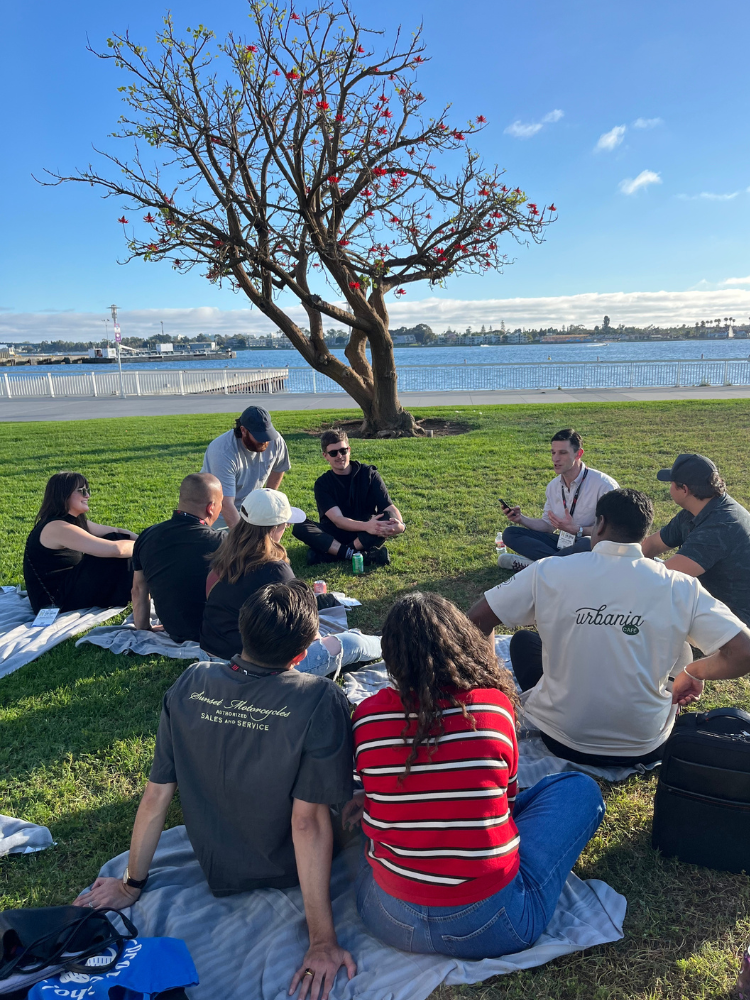
After opening, participants can enter a 10-week mentorship program focused on practical business topics rather than abstract theory. Each week tackles a different operational challenge, from leadership to pricing to team development, with experienced operators serving as mentors.
“You get more than one mentor,” Akshat says. “No single person has the right answer for pricing and leadership and team culture. Different problems need different people.”
Importantly, the mentorship doesn’t end when the program concludes. Alumni continue to have access to mentors and fellow business owners, creating what Akshat describes as an ongoing village of support.
More than opening day
For Coffee Futures Fund, success isn’t measured simply by helping another café open. Akshat believes the more meaningful questions come years later. Is the owner earning a livable wage? Can the café operate for two weeks without the owner being present? Does the owner still enjoy coming to work?
Those benchmarks may sound simple, but they represent something deeper: a business that has become sustainable instead of merely surviving.
The organization’s early participants suggest the model is working. Jared Johnson, owner of Subliminal Coffee in Nashville, Tenn., credits the program with helping launch the company’s roasting operation and expanding café capacity. “Coffee Futures Fund has been an incredible resource by means of education, community, and financial support,” he says. “The national network of peers that CFF created has turned into lasting friendships … and has provided encouragement in the journey of entrepreneurship.”
Connor Moellenbeck, owner of Daydrink in Iowa City, says the ongoing mentorship has been equally valuable. “My favorite part of the program is that the mentorship never ends,” he says. “You have a large group to lean on … and a safe space to ask, ‘Am I doing this right?’”
Why every retailer should care
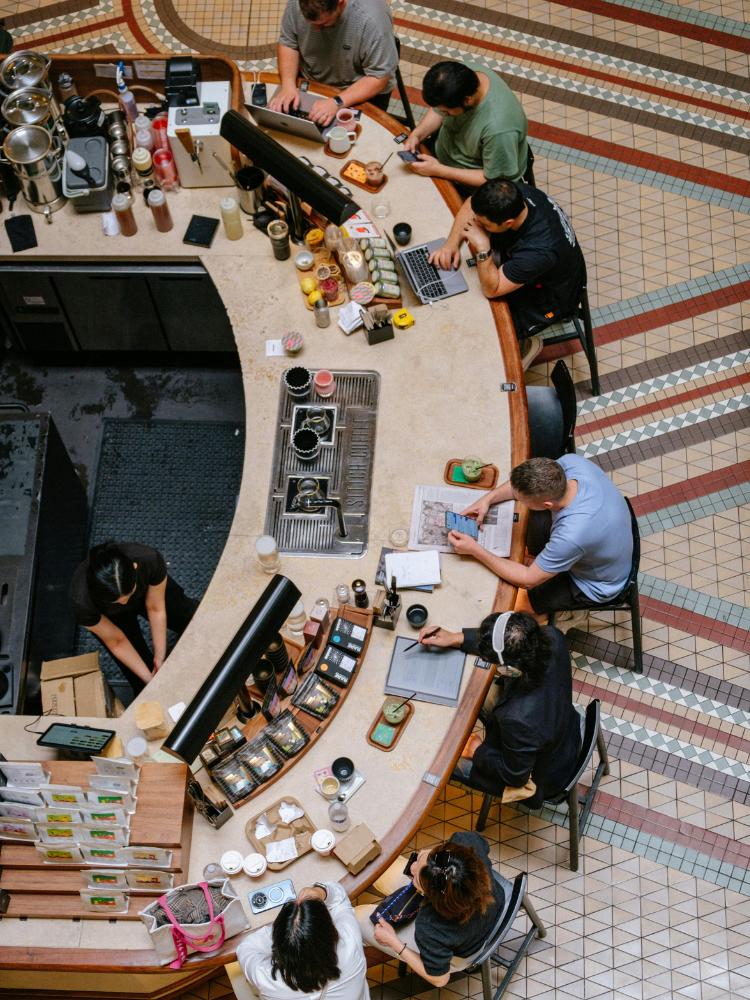
Even café owners who never participate in Coffee Futures Fund may find themselves nodding along with many of Akshat’s observations. For example, he believes one of the industry’s biggest misconceptions is that running a café is mostly about coffee. “It’s about 20% making the coffee and 80% everything else,” he says. “Cleaning, scheduling, inventory, the hundred small decisions that make someone want to come back.”
He also argues that specialty-coffee professionals need to become more comfortable discussing business openly. “Coffee has a rich, rigorous culture around craft,” he says. “It has almost no real culture around finances. Operators don’t share their numbers with each other. … So the same mistakes get made by the next person, and the one after that.” That kind of transparency, he believes, could dramatically improve the odds for future entrepreneurs.
Ultimately, Coffee Futures Fund isn’t simply trying to help more people open cafés. It’s trying to help more of those cafés remain healthy businesses for years to come.
Today, Akshat notes, only about four in 10 independent coffee shops survive beyond five years. His goal is ambitious but straightforward: Double those odds. He says, “It would happen when nobody has to figure it out alone.” For an industry built on relationships, that may be the most valuable investment of all.
This article originally appeared in the August + September 2026 issue of Barista Magazine. Read more of the issue online here for free.
ABOUT THE AUTHOR
Born in Manhattan Beach, Calif., Delilah L. Morris (she/they) today writes from her home in Olympia, Wash. Her main interest is covering food and beverage trends, and she travels extensively to trade shows and conferences to keep up with the latest developments. When she’s not writing, you can find Delilah watching crime dramas with her two cats.

Subscribe and More!
As always, you can enjoy your own copy of Barista Magazine by subscribing or ordering an issue. Long live physical media!
You can read the digital edition of Barista Magazine for free here.
Support Barista Magazine and show your love with a Membership.
Signup for our weekly newsletter.
Join us at Camp Coffee Shop in Napa, California.
The post Who’s Teaching Coffee Shop Owners How to Succeed? appeared first on Barista Magazine Online.
Source: Barista Magazine