

European Coffee Federation Issues Best Practices for Green Coffee Transport – CoffeeTalk

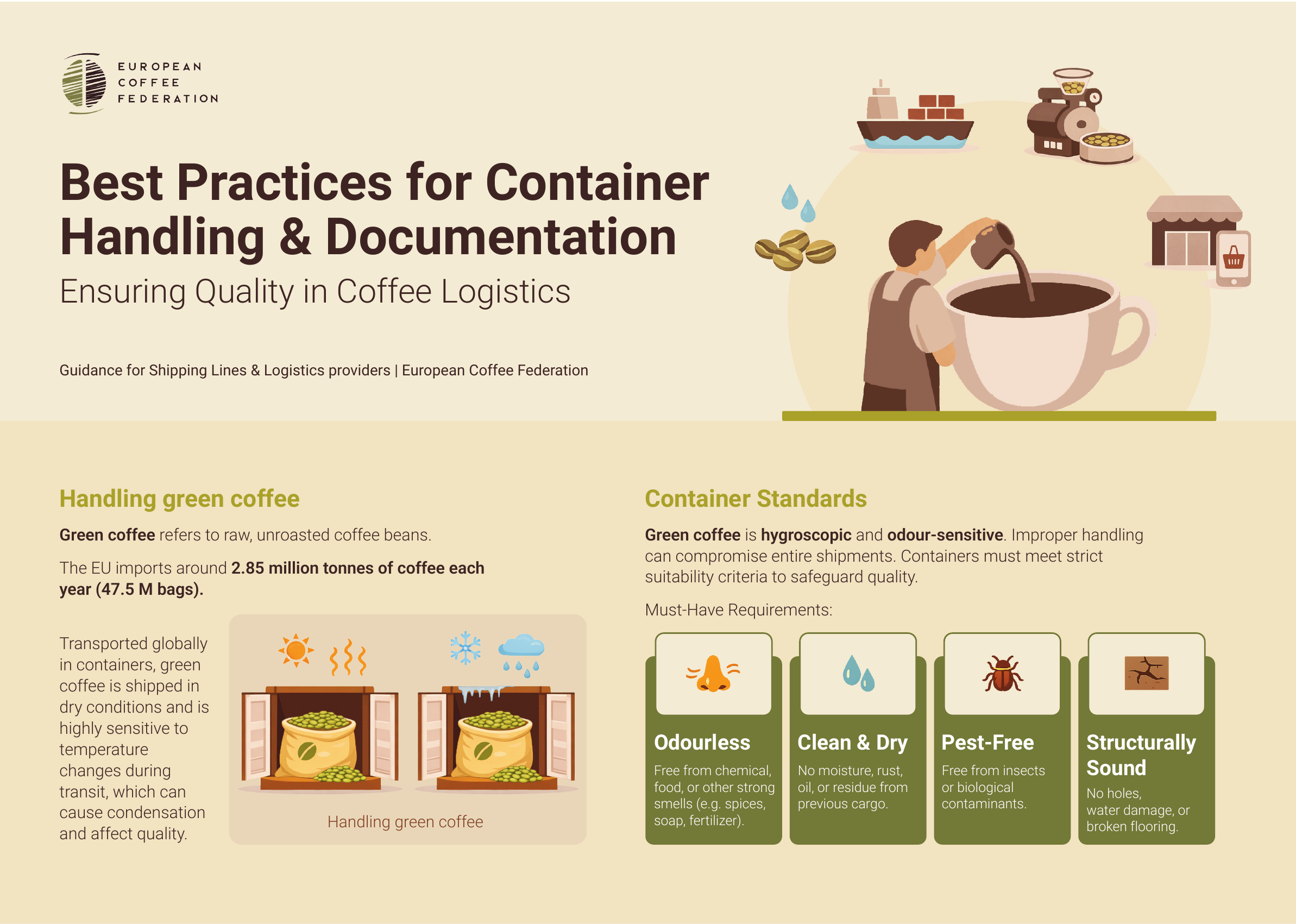
The European Union imports approximately 2.85 million tonnes of green coffee annually, primarily via maritime container shipping. Green coffee is susceptible to damage from moisture, temperature variations, and foreign odors during transit, which can result in quality degradation and financial losses.
In response to these challenges, the European Coffee Federation (ECF) has released an infographic outlining best practices for container handling, loading, and documentation. The initiative aims to assist shipping lines and logistics providers in maintaining coffee quality throughout the supply chain.
The infographic, which draws upon established coffee trade guidelines such as the International Trade Centre’s Coffee Guide, addresses several key areas:
- Container Standards: Emphasizes the necessity of using containers that are clean, dry, odor-free, pest-free, and structurally sound.
- Loading Methods: Details common loading configurations, including bags (approximately 275–320 bags of 60 kg), big bags (around 20 tonnes), or bulk in liners (20.7–21.6 tonnes), typically within 20-foot containers.
- Loading Guidance: Recommends “saddle stow” over “across stow” and advises leaving space below the container roof to mitigate the impact of higher temperatures.
- Communication: Stresses the importance of early alignment among supply chain partners due to varying requirements across companies, origins, and destinations.
Additionally, the infographic references the European Standard Contract for Coffee (ESCC), which governs the majority of European coffee imports. The ESCC establishes a standardized framework for defining responsibilities, timelines, and risk allocation between buyers and sellers in the coffee trade.
Read More @ ECF
Source: Coffee Talk