

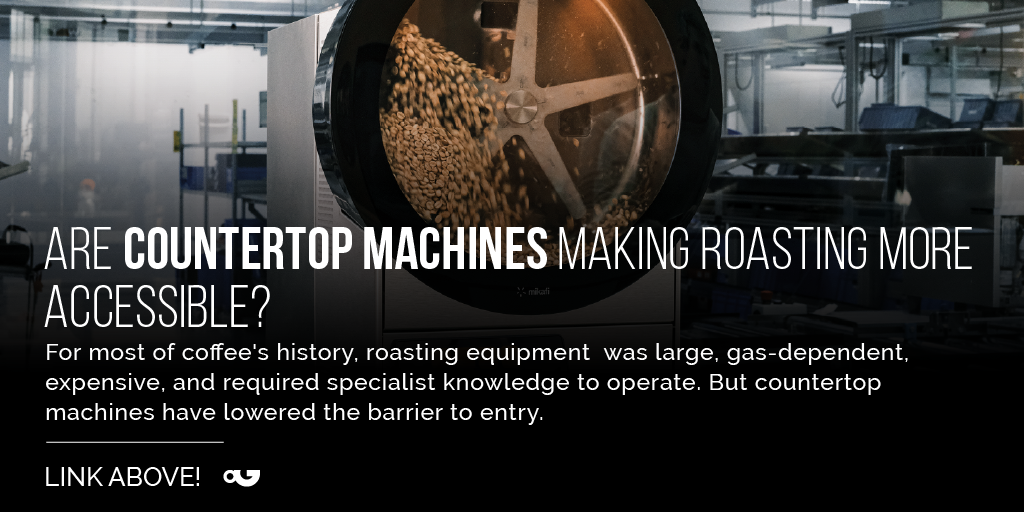
Are countertop machines making roasting more accessible?

Estimated reading time: 7 minutes
Key takeaways
- Countertop roasters like Mikafi need no extra ventilation or dedicated space.
- Thermoplan acquired countertop roaster project Mikafi, which will debut at WoC Brussels from 25 to 27 June 2026.
- Predefined roast profiles let any barista roast without specialist training.
- Compact designs fit standard café countertops, making in-house roasting viable anywhere.
Roasting your own coffee used to require significant capital. Full-scale roasting facilities cost thousands of dollars to build and operate, which made in-house roasting a realistic option only for larger businesses with the budget to match.
But the barrier to entry is now lower. As the number of micro and nano roasters continues to grow, demand has risen for equipment that smaller operators can actually afford and use, including countertop roasters. These compact machines allow coffee shops and hospitality businesses to roast on-site, adding a revenue stream and giving them a credible point of difference.
“Coffee shops want to offer their customers a unique experience and stand out from competitors,” says Andrea Della Zoppa, Project Manager for Thermoplan, which acquired compact tabletop roaster Mikafi in August 2025.
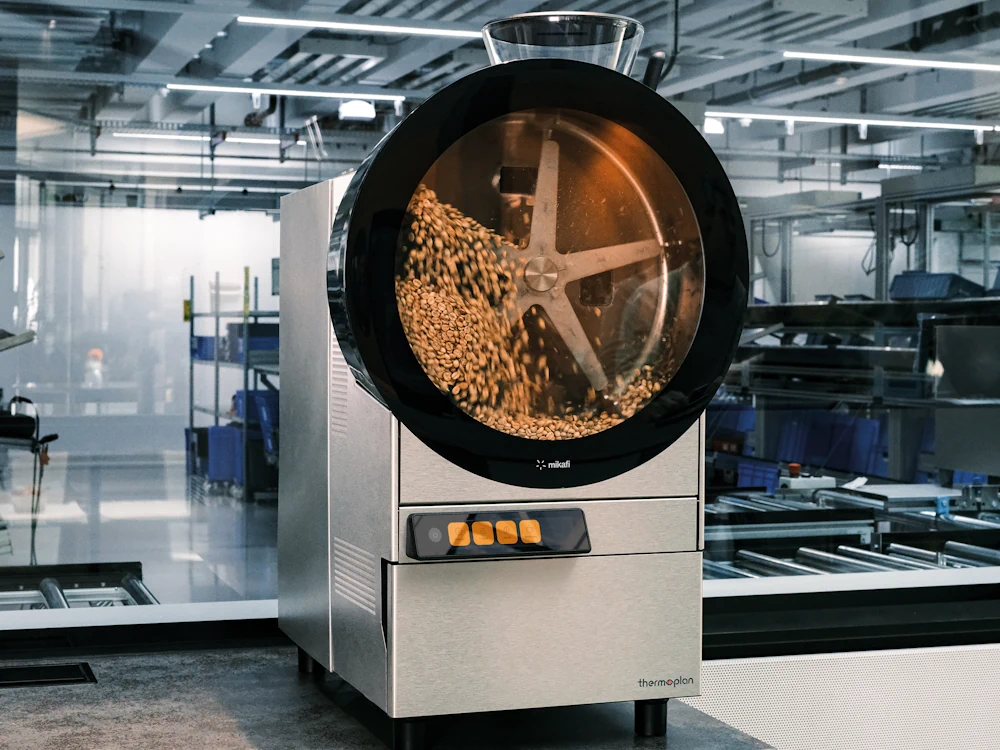
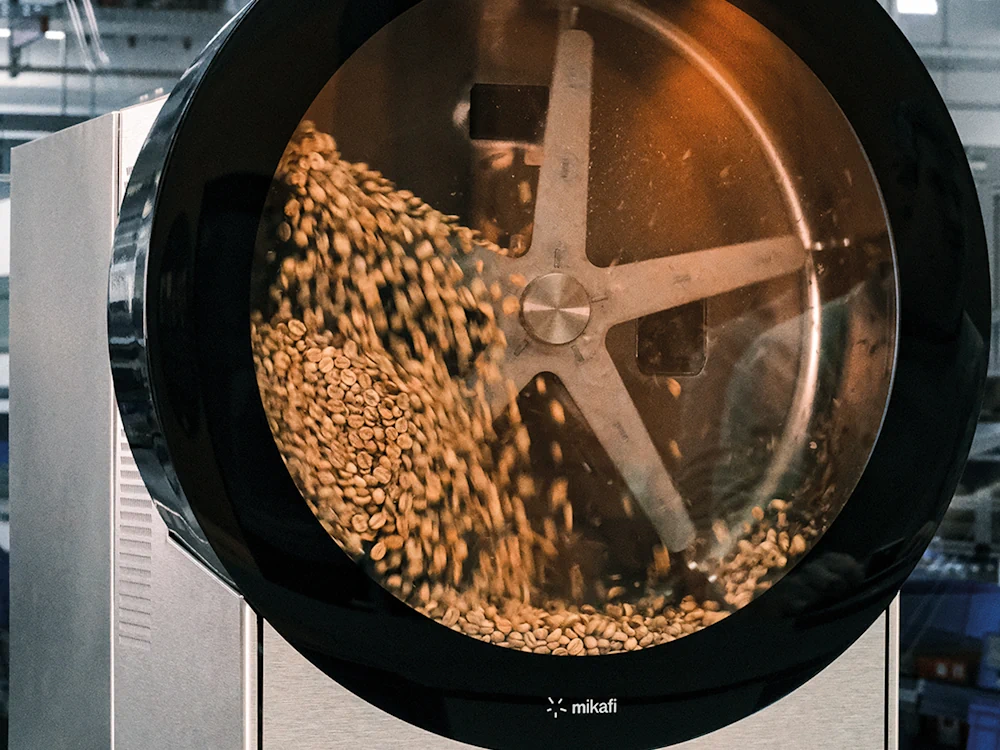
“Thanks to the big glass drum, you can really demonstrate the roasting process, which builds trust and brings customers closer to the coffee,” she adds. “Even the sensory impact can’t be overlooked. People walk into the store, smell roasting coffee, and then see the machine – enhancing the whole experience.”
You may also like our article on how super-automatic coffee machines are changing.
The rise of in-house roasting
For a long time, roasting in-house meant opening a separate facility. Cafés needed large commercial roasters, gas ventilation systems, and enough space to accommodate them. For smaller businesses on tighter budgets, running a dedicated roasting site was simply not feasible.
The numbers reflect this. A Specialty Coffee Association (SCA) study found that launching a roasting business requires a minimum of US$120,000 in start-up costs, before accounting for ongoing operational expenses, which puts in-house roasting out of reach for most independent cafés.
This began to change in the early 2010s, when smaller-scale roasting equipment made it possible for more operators to start roasting, without needing the capital to build a full roastery from scratch.
The technology itself has matured considerably. Modern countertop roasters now feature space-saving designs, improved convection roasting systems, and software that reduces the learning curve for less experienced roasters. For coffee brands, this means maintaining consistent quality without needing a dedicated roasting site, while also leaving room to increase output as demand grows.
Why more cafés are roasting their own coffee
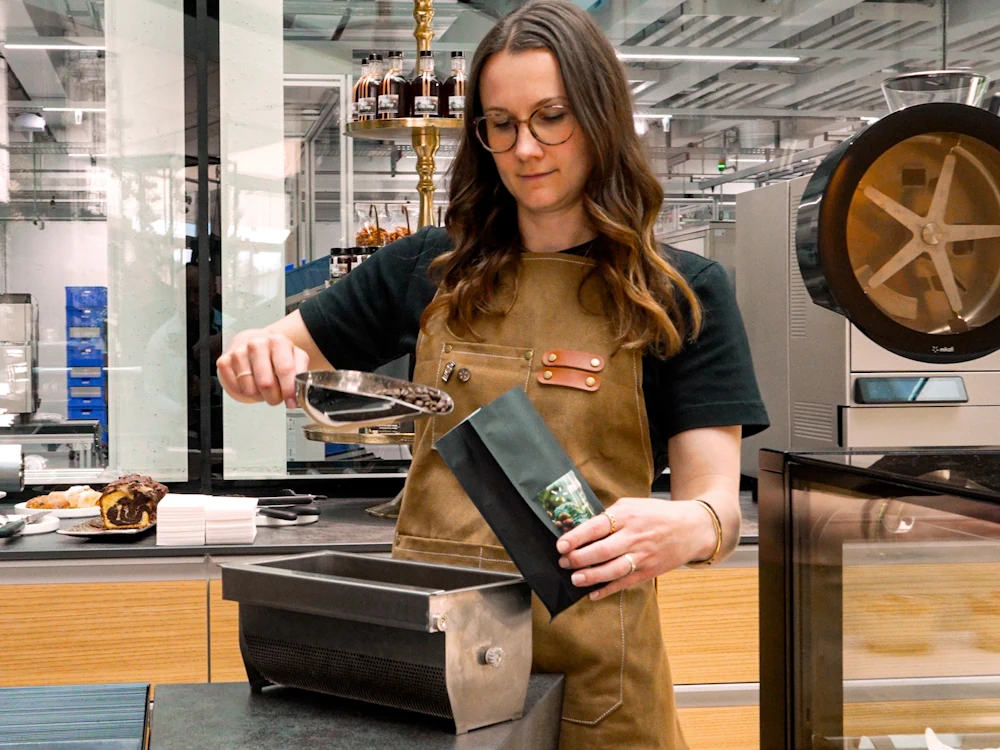
Roasting in-house enables a café to sell retail bags and build a brand identity that can’t be replicated by businesses buying coffee from wholesale roasters.
The business case for roasting in-house has become increasingly compelling. Coffee shops that roast their own beans achieve profit margins of 8.79%, compared to 6.86% for non-roasting coffee shops, according to data from the SCA. The cost differential between green and roasted beans is a major driver.
“A kilo of roasted coffee costs around 20 to 35 Swiss Francs (US$25.40 to US$44.50), while a kilo of green beans costs around 7 to 12 Swiss Francs (US$8.89 to US$15.25),” Andrea explains. “If you roast around 5 kilos per day, it really starts to pay off, and if you roast even more, you pay off the machine faster.”
Beyond cost reduction, in-house roasting also builds supply chain resilience. Green coffee prices reached their highest recorded levels in early 2025, exceeding US$4.40/lb, and businesses that depend entirely on wholesale roasters are exposed to those fluctuations. Roasting in-house gives operators more control over sourcing decisions, stock levels, and the ability to pivot when supply chains tighten.
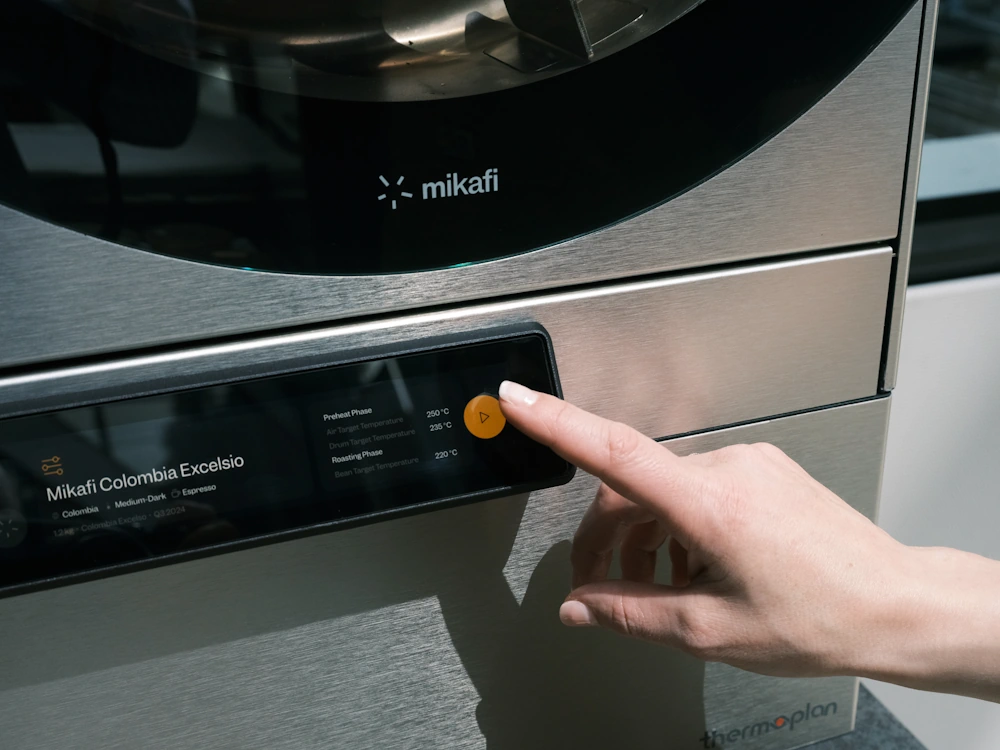
Countertop roasters have been pivotal in making roasting accessible. Mikafi, now part of Thermoplan’s bean-to-cup ecosystem, is 60cm deep and 50cm wide, making it suitable for all standard café countertops. The machine’s integrated exhaust air filtration system means no additional ventilation installation is required, making it viable for smaller spaces.
Thermoplan will showcase Mikafi at World of Coffee Brussels from 25 to 27 June at booth 6637, where visitors can experience live roasting demonstrations alongside Thermoplan’s Black&White4 Competizione machines.

What do coffee shops need to know before they start roasting?
For many operators considering in-house roasting, the concern is less about cost and more about knowledge. What do you actually need to know before starting?
One area businesses tend to underestimate, according to Andrea, is sourcing green coffee. “Everyone knows where to get roasted coffee, but green coffee is traditionally sold in 60 to 70kg bags through specialist importers, a procurement model that can be inaccessible for new entrants,” she says.
Andrea explains that Mikafi addresses this directly through an integrated green coffee marketplace, allowing operators to purchase green coffee in flexible quantities directly via a portal.
Post-roast inventory management is another area worth understanding before starting. “After every roast, you need to let the coffee sit for around seven to ten days to degas,” Andrea explains.
Countertop machines offer support
Beyond these considerations, the machine itself must bear the weight of the learning curve. Mikafi offers complete flexibility: beginners can start with predefined roast profiles to achieve consistent results, while experienced roasters can manually adjust all relevant variables, create their own profiles, and experiment with flavour and roast level.
In practice, this means a barista with little experience can load green coffee into the machine, select a predefined recipe on the touch display, press play, and carry out other tasks while the machine heats, roasts, and cools the beans automatically. “The barista doesn’t need roasting knowledge; they just select the predefined recipes,” Andrea says.
Meanwhile, an experienced roaster can log in to the Mikafi portal to create custom profiles, adjust roasting curves, and save them to the device for anyone to use.
The Mikafi portal extends support beyond the machine itself. The cloud-based platform allows operators to remotely access all devices, manage roasting profiles across multiple locations, track live roasting curves with real-time temperature data, and review roast history.
This enables comparison of different profiles over time. For a coffee chain or multi-site hospitality group, this means consistent quality can be maintained across every location from a single centralised platform.
In-house roasting is moving from a niche practice into a mainstream business strategy. Margin pressure, the demand for differentiation, and a growing consumer appetite for fresh, quality coffee are all driving the shift.
Countertop roasters demonstrate that accessibility is central to supporting these efforts. The opportunity is no longer limited to established roasters, but extends to any café operator ready to take the first step.
Enjoyed this? Then read our article on how super-automatics could reshape coffee competitions.
Photo credits: Thermoplan
Perfect Daily Grind
Please note: Thermoplan is a sponsor of Perfect Daily Grind.
Want to read more articles like this? Sign up for our newsletter!
Source: Perfect Daily Grind